
Last updated November 21, 2026
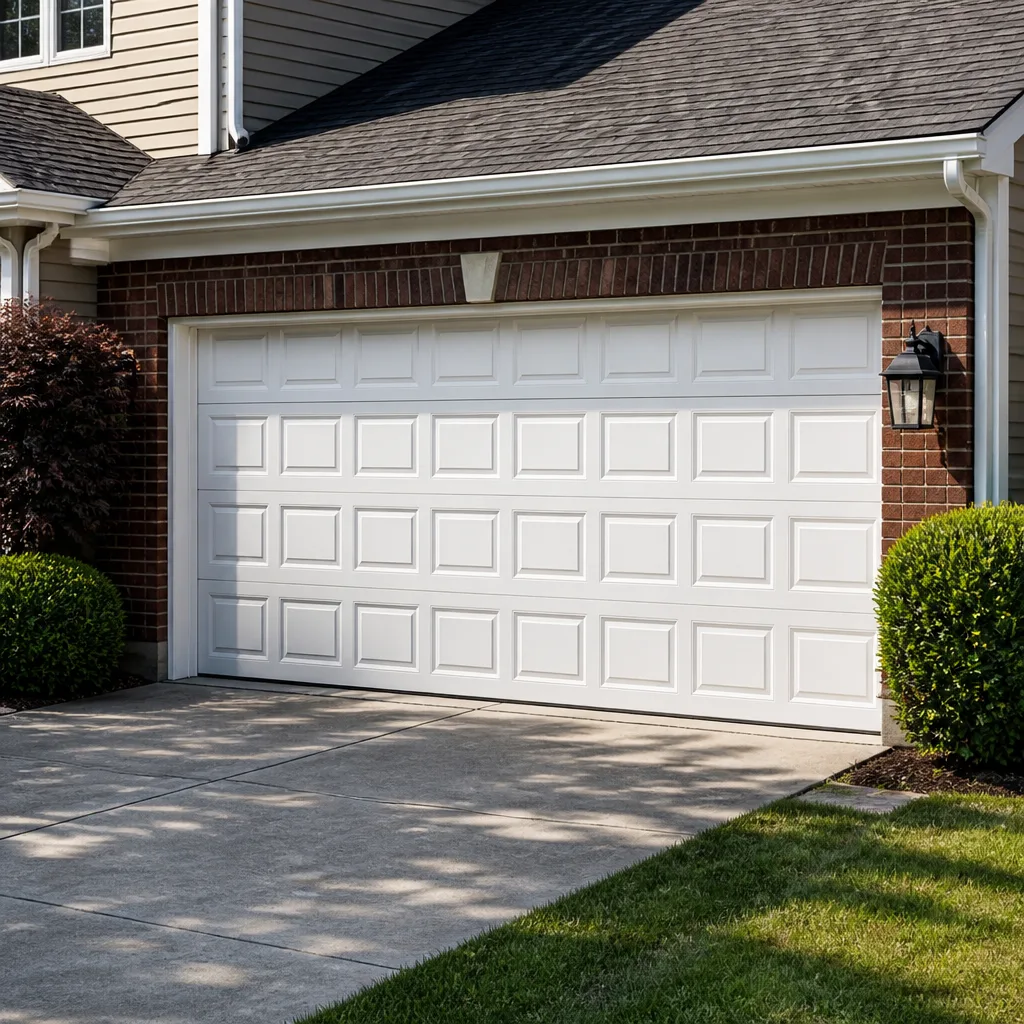 Raised-panel steel
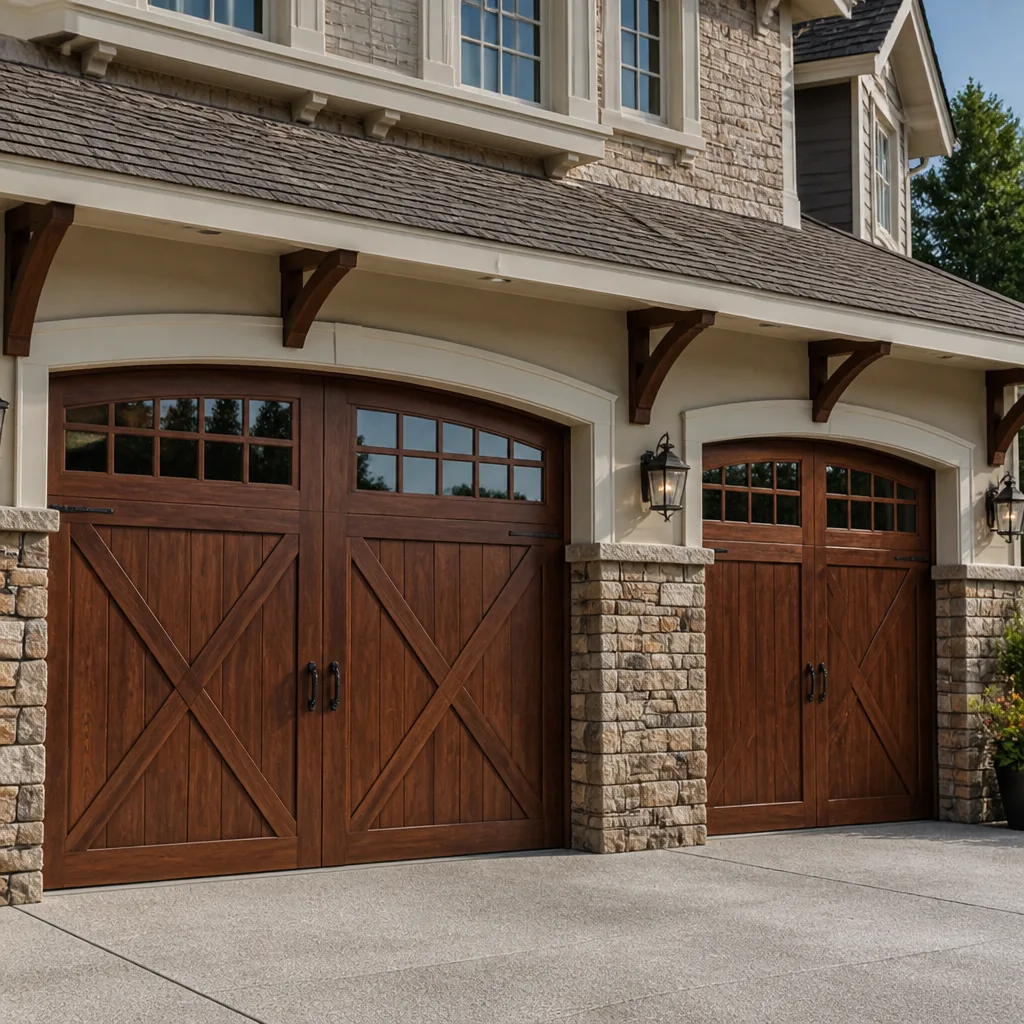 Carriage house
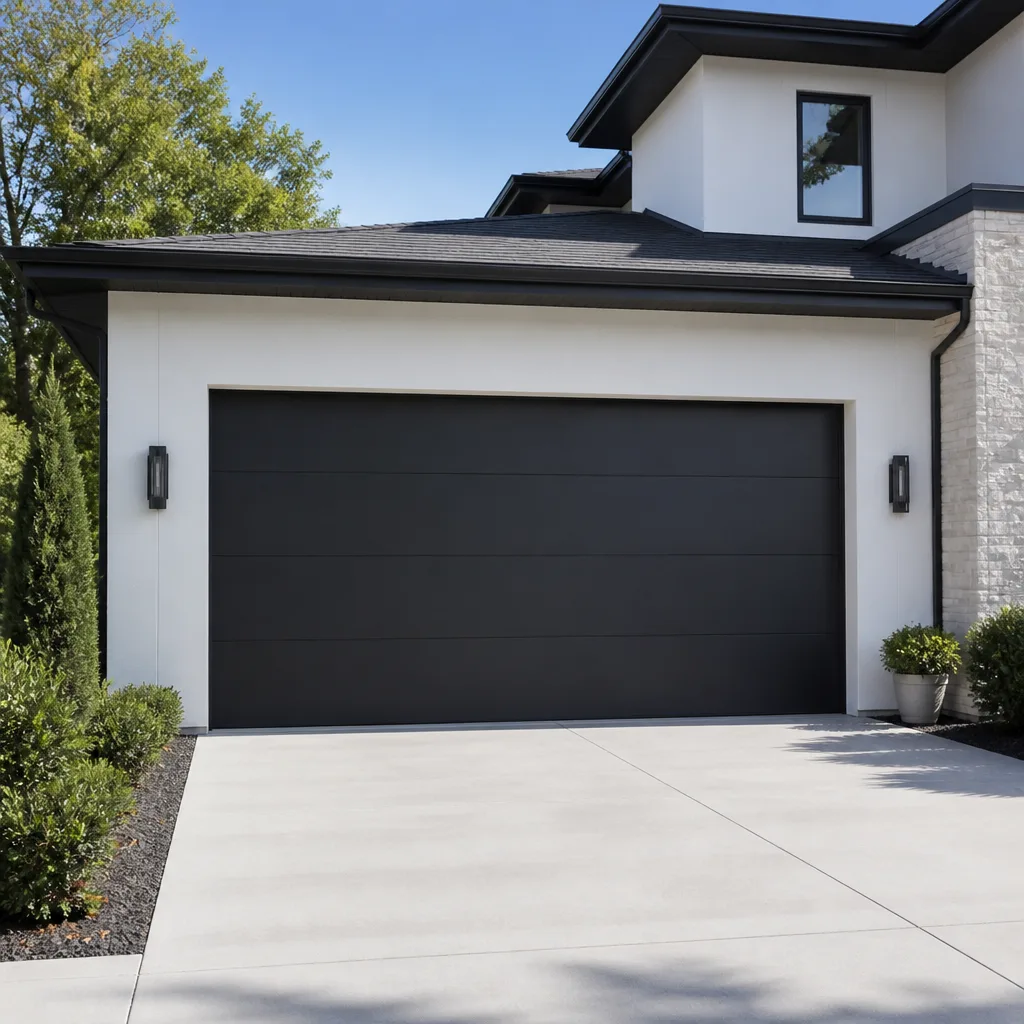 Modern flush
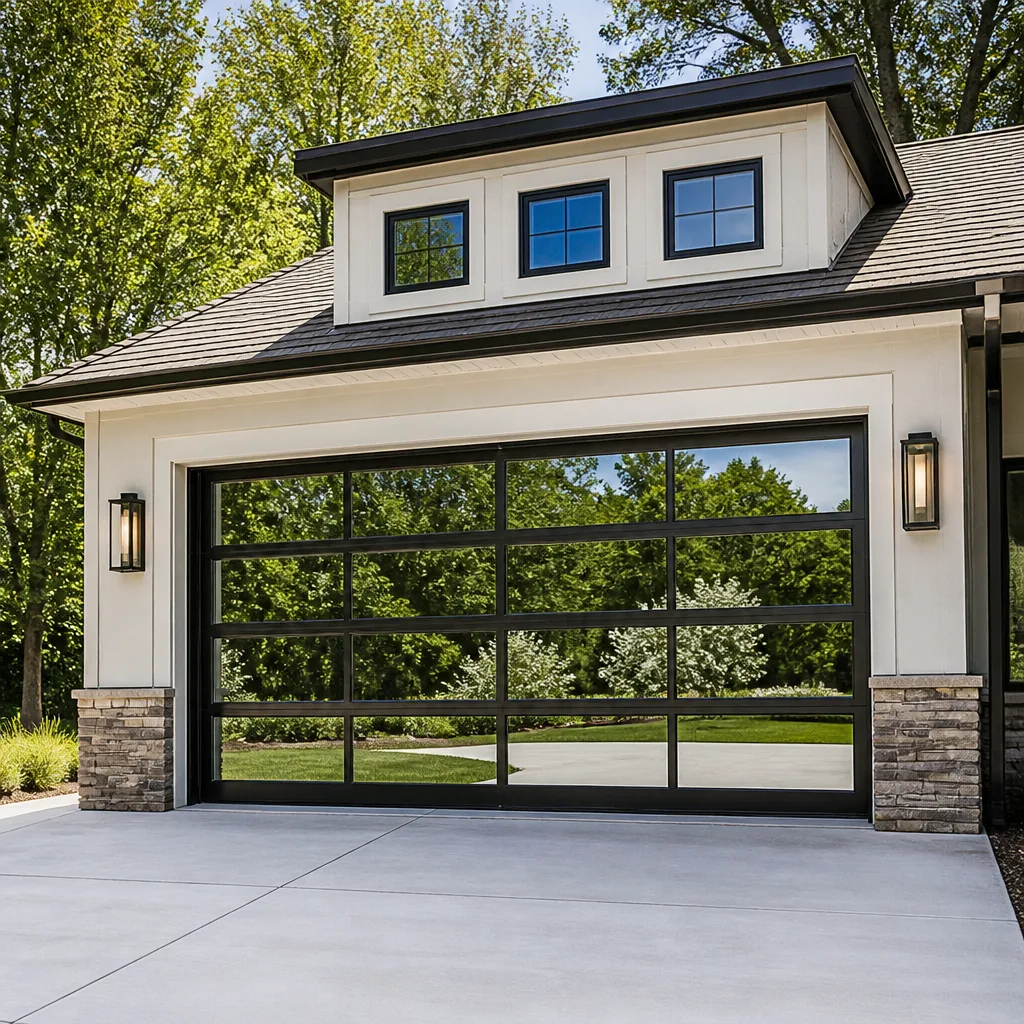 Full-view glass
 LiftMaster openers
 Chamberlain openers
Full 25-point door and opener safety check with every visit - springs, cables, rollers, tracks, and your LiftMaster or Chamberlain opener included
You get a price before we start. It does not change when the pro arrives.
Get your free estimateGarage Door Warning Signs: A Lorain Homeowner’s Reference Guide
A door that takes two seconds longer to open than it did last month isn’t “getting old” – it’s telling you the spring tension has dropped below safe operating range, and you’re now running on borrowed time. Most warning-sign lists just catalog the symptoms: noisy door, slow door, crooked door. That’s not much help, because a symptom without a cause is easy to dismiss. This guide does the opposite. We connect each warning sign to the specific component that’s failing, explain what that component actually does, and tell you what tends to happen if you leave it another 30, 60, or 90 days. You’ll finish knowing which sounds matter, which sights matter, and which signs mean stop using the door today. Some of what we describe is specific to the housing and winters we work in around Lorain.
Quick Answer
The most serious garage door warning signs are a snapped torsion spring, a frayed or slack cable, a door that drifts to one side as it travels, and any door that reverses or falls instead of holding position. Those four mean stop operating the door and call a specialist now. Slower opening, new noises, and an opener that occasionally ignores the remote are earlier warnings – real, but on a schedule of days to weeks rather than minutes. In Lorain, the freeze-and-thaw cycle between late fall and early spring tends to expose worn springs, stiff rollers, and opener logic boards that misbehave in the cold.
Styles & brands we work with
- Raised-panel steel
- Carriage house
- Modern flush
- Full-view glass
- LiftMaster openers
- Chamberlain openers
Table of Contents
- What the Sounds Are Telling You
- Door Drift and What It Reveals About Balance
- Reading a Torsion Spring Before It Snaps
- Why Your Opener Acts Up in Lorain Winters
- A Severity Tier System: Fix This Week vs. Stop Now
- The Door Drift Diagnostic Test
- Common Mistakes to Avoid
- When to Call a Professional
What the Sounds Are Telling You
Sound is the earliest and cheapest warning a garage door gives you, but only if you can tell the difference between a door that’s complaining about lubrication and a door that’s about to fail. Here’s how we separate them, described the way a non-mechanic hears them.
A spring nearing failure makes a sharp, metallic “ping” or “twang” – sometimes one loud crack, sometimes a rapid series of smaller snaps as the coil unwinds unevenly. It’s high-pitched and separate from the general rumble of the door. If you hear it once, treat it as a warning shot. A torsion spring under load can snap fully on the next cycle or the next hundred; you don’t get to choose.
A failing roller bearing sounds like a grinding or squealing that rises and falls as the door moves – a continuous complaint, not a single crack. It comes from the rollers in the track and gets worse as the bearing dries out and the metal starts to rub.
A fraying cable is the quietest of the three, which is what makes it dangerous. You may hear a faint scraping or a “whisker” sound as broken strands catch on the drum, or nothing at all. Cables rarely announce themselves the way springs do, so the visual check in the next section matters more for cables than listening does.
One useful rule: a new noise that repeats every time the door moves is almost always a mechanical wear item (rollers, hinges, bearings), while a sudden one-time noise followed by a door that won’t move is usually a spring or cable. Our technicians have up to 13 years of experience listening for exactly this distinction, and it’s why we can often diagnose a failure over the phone before we arrive.
Door Drift and What It Reveals About Balance
Door drift is the door moving to one side as it travels up or down – you’ll see one edge of the door sagging or pulling ahead of the other, or a visible gap between the door edge and the track on one side. Drift isn’t cosmetic. It tells you the two sides of the door are no longer being lifted with equal force, which points to a stretched or binding cable on one side, uneven spring tension, or a worn roller pulling the door off its true line.
Ignored, drift compounds. The door rubs the track on one side, the rollers wear faster, the panel edges scuff, and eventually the door can come off the track entirely. That’s the point where a repair turns into a panel replacement.
The mechanism is straightforward once you see it. A torsion system uses a spring or springs on a shaft above the door, and two cables run down each side to lift the door evenly. If one cable stretches or one spring loses tension, the shaft rotates unevenly and the door travels crooked. A single stretched cable on a double-car door is a common failure in Lorain homes, and it’s one a generalist contractor is likely to miss because it looks like a track problem rather than a balance problem. Catching drift early is one of the simplest ways to avoid a bigger garage door repair bill later.
Track alignment, roller condition, and cable tension all feed into drift, so a proper diagnosis means checking all three together rather than tightening one and calling it done.
Reading a Torsion Spring Before It Snaps
Torsion springs are the coiled metal cylinders mounted on the shaft above the door. They carry the entire weight of the door, and when they fail, they fail with force. A standard double-car door spring in a Lorain home is sized to lift a door in roughly the 130- to 160-pound range, and when one of those springs lets go, the door becomes dead weight the opener can’t lift.
Here’s what to look for, in order of how urgent each sign is:
- A visible gap in the coil. Run your eye along the length of the spring. A clean gap – the coil separated with a section missing – means the spring has snapped. Do not operate the door.
- Winding cone shift. The cone at the end of the spring is held by set screws. If those screws have loosened or the cone has rotated, the spring is unwinding and about to release. This is a stop sign.
- Rust streaks and dark staining. A spring that’s rusted through in spots is a spring that’s fatigued. In Lorain’s wet winters, condensation on a cold spring is common, and rust accelerates the fatigue.
- Loosened or stretched winding distance. If the spring has visibly “unwound” – the coils look more spaced out than they used to – the tension is gone.
- A door that feels heavy. If you lift the door by hand and it’s much harder to raise than it was, the spring has already lost most of its lift.
Springs are a genuine safety hazard. A tensioned torsion spring stores enough energy to cause serious injury, and the only safe work on one is a full replacement by a trained technician using proper winding bars and the right wire gauge for the door. Please don’t try to adjust, lubricate, or remove a spring yourself. If you’re seeing any of the signs above, that’s the moment to call in someone who does garage door spring repair for a living.
Why Your Opener Acts Up in Lorain Winters
An opener that works fine in October and starts intermittently ignoring the remote in January is one of the most misdiagnosed problems we see. Homeowners replace batteries, reset remotes, and buy new openers – when the real cause is a cold logic board inside the motor unit.
Here’s how the mistaking happens. When the temperature drops, the control board’s oscillator circuit and its solder joints are affected by contraction. A marginal joint or an aging capacitor can cause the board to miss a command or reset itself. The symptom looks identical to a dead remote battery: press the button, nothing happens, press again, the door moves. The difference is that a remote-battery problem shows up consistently, while a cold-board problem appears “sometimes” and tends to clear as the day warms or the motor unit heats up from use.
How to tell them apart quickly:
- Press the wall switch instead of the remote. If the wall switch works but the remote doesn’t, the remote or its battery is the problem. If both are intermittent, the board or the receiver is.
- Watch the safety sensors. A misaligned sensor shows a blinking light on the motor unit and will cause the door to reverse – that’s a sensor issue, not a board issue.
- Note when it fails. If it’s only on cold mornings and works reliably later, that points to the logic board rather than the remote.
We work on LiftMaster, Chamberlain, Genie, and Craftsman opener systems regularly, and cold-weather board faults are one of the most common calls we get across Lorain between December and March. If the opener itself is the issue, professional garage door opener repair usually beats replacing the unit. And once the opener is the reason the door won’t move at all – stuck open or stuck shut – remember that a door that won’t close is still a security issue, and emergency service is available for exactly that.
A Severity Tier System: Fix This Week vs. Stop Now
Not every warning sign is equally urgent. To make the decision easier, we sort them into tiers. The tier tells you whether to plan a repair this week or stop using the door and call now.
Tier 3 – Watch and schedule. These are early-warning signs. Book a service call within the next week or two, but the door isn’t dangerous yet.
- General squeaking or grinding that smooths out with a little movement
- Slower opening than it used to be, with the door moving evenly
- Faint rust streaks on springs but no coil gap
- An opener that occasionally ignores the remote in cold weather only
Tier 2 – Act within a few days. Something is actively wearing and likely to get worse.
- Visible drift to one side as the door travels
- A scraping or whisker sound from a cable, or a cable that looks slack on one side
- A roller or hinge that’s clearly worn, with visible wobble
- An opener that runs but the door doesn’t move smoothly
Tier 1 – Stop using the door and call now. These are safety-critical.
- A visible gap in a torsion spring, or a spring that has snapped
- A cable that’s frayed, kinked, or off its drum
- The door is off its track, or one side has dropped
- The door reverses when you close it, or falls instead of holding position
- You can hear a loud crack and the door now won’t lift
Frayed cables can snap with force and whip; a door off its track can come down without warning. If you’re in Tier 1, keep people clear of the door and call. We answer 24/7 and offer fast dispatch from 7am to 7pm.
The Door Drift Diagnostic Test
You can check for drift and balance on your own without any tools, and it takes under a minute. This is a look-and-listen test, not a repair – don’t adjust anything.
- Disconnect the opener. Pull the red emergency release cord to put the door in manual mode. The door will now be controlled by hand only.
- Watch the door travel. Lift the door slowly about halfway. Watch the gap between each side of the door and the track. If one side is visibly lower or closer to the track, you have drift.
- Check the halfway hold. Let the door sit at the halfway point with your hand off it. A balanced door holds steady. A door that creeps down or drifts sideways has lost balance.
- Listen for the drift. If you hear a scraping or uneven rumble on one side as it moves, note which side. That tells the technician where the problem is before arriving.
- Reconnect when done. Pull the release cord again to re-engage the opener, then run the door through one full open and close cycle while you watch.
If the door drifts or creeps in step 3, stop and have a professional look. A small bit of drift you catch now is often just a cable or roller service; the same drift left alone can turn into track damage or a panel replacement. This test is the single most useful thing a Lorain homeowner can do seasonally, and it takes less time than finding your keys.
What a Failing Cable Looks Like Before It Fails
Cables are the quietest component on the door and the one most homeowners overlook. A cable is a steel-wire rope that runs from the bottom corner of the door up to the drum on each side, and it’s what keeps the door balanced and prevents it from dropping. When a cable stretches or frays, it usually doesn’t make the loud noise a spring does. Your best warning is visual.
- Nowhere to look for a “whisker” of wire. Get a flashlight and look along the cable on each side. A cable with broken strands sticking out is frayed and needs to be replaced.
- Slack on one side. With the door closed, compare how taut each cable is. A noticeably looser cable is stretched and needs attention.
- Kinks and birdcaging. A cable that’s crimped or unwinding in a spiral is a cable about to fail. Do not run the door.
- Rust. A rusted cable is a weakened cable. Given Lorain’s cold, wet winters, this is common and easy to miss.
- A crooked door on the way up. If the door drags on one side as it lifts, a cable or drum issue is likely the cause.
Cables are a safety job. A tensioned cable can snap with serious force, and cable replacement means releasing and resetting the spring system – which is why it belongs with garage door spring repair work rather than a general repair call. If you see any of the above, stop operating the door and call. We answer 24/7.
What to Check Each Month (and What to Leave Alone)
A five-minute monthly check catches most early warnings and tells you when to stop and call. Here’s the sequence, followed by the things you should not touch.
- Listen from inside. Run the door up and down. Any new noise, repeat it and note whether it’s a single crack (spring) or a continuous grind (roller).
- Watch the travel. Look for drift to one side as described above.
- Check the springs visually. Look for coil gaps, rust, or a shifted winding cone. Don’t touch them.
- Check the cables. Fraying, slack, kinks, or rust mean a call.
- Test the safety reverse. Place an object in the door’s path (or use the manufacturer’s test procedure) and confirm the door reverses. This is a standard safety check, not a repair.
- Look at the opener. Note any blinking lights on the motor unit – they often indicate a sensor or safety issue before the door fails.
Leave these alone: don’t adjust the springs, don’t loosen a winding cone, don’t move a cable, don’t try to realign a track with a hammer. Those are the jobs that can go wrong in a hurry. When you spot a problem in the monthly check, that’s your trigger to call a specialist, not to reach for a wrench. We work on doors and openers from Wayne Dalton, Raynor, Clopay, and Amarr, and we can often identify what’s failing from the sound and the part you name.
Bright vs. Dim: What a Failing Safety Sensor Looks Like
Safety sensors sit at the bottom corners of the door and use an invisible beam to detect anything in the door’s path. When one lens is dirty or misaligned, the door will refuse to close or will reverse partway down – and it’ll usually flash a light on the motor unit. A homeowner’s first instinct is to blame the opener, but the sensor is the more likely culprit when the door goes partway and then reverses.
This is one of the few warning signs you can check yourself. Wipe the lens on both sensors with a soft cloth, then check that each sensor’s LED is on and steady. A dim, flickering, or off LED points to a sensor that needs adjustment or replacement. Don’t force the door to close by holding the wall button or blocking the sensor – that overrides a safety feature and is exactly the kind of shortcut that leads to damage or injury.
In Lorain, drops of condensation and road salt tracked into the garage during winter are common causes of a sensor lens clouding up. A quick wipe may solve it. If the LED stays wrong after a clean, that’s a call. Sensor replacement is a small job, and it keeps the door’s safety systems working the way they should. This is also the kind of early catch that saves you from an emergency call later on.
See the difference
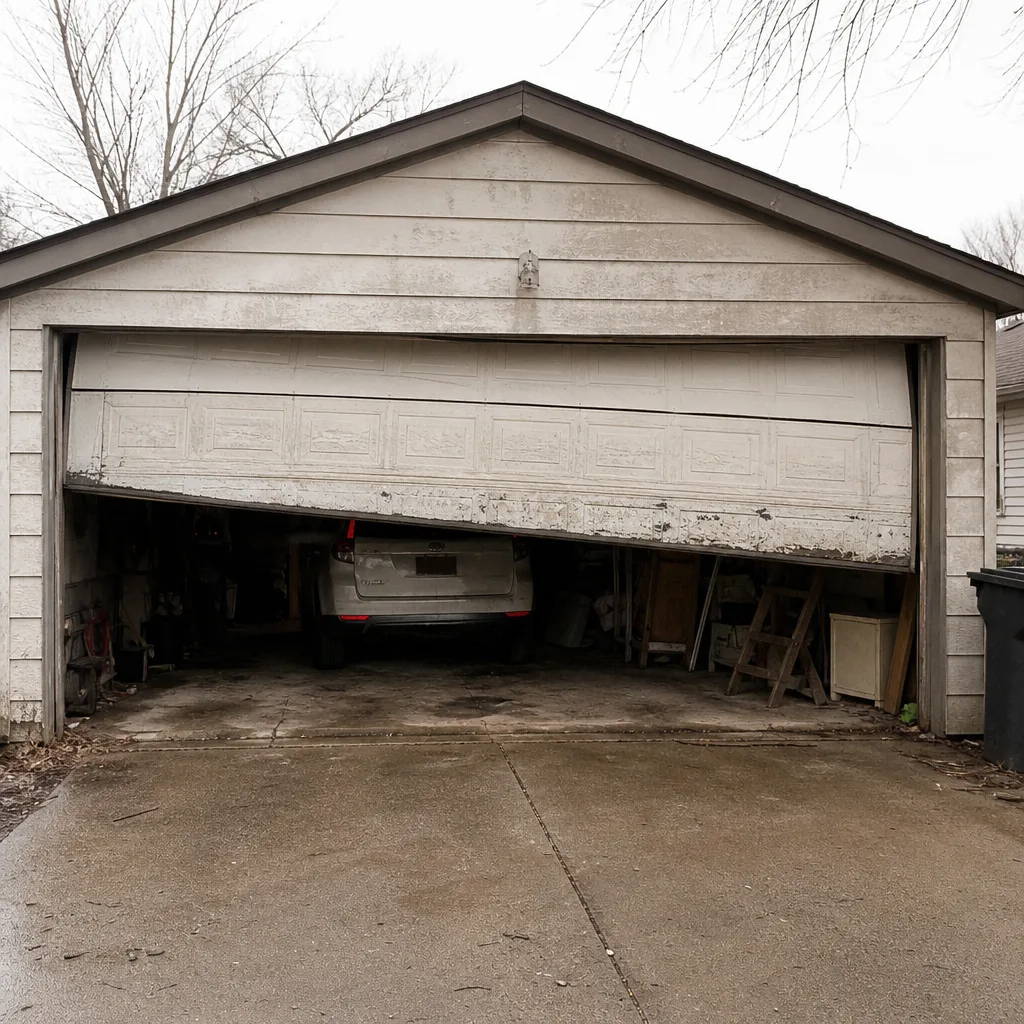 Before
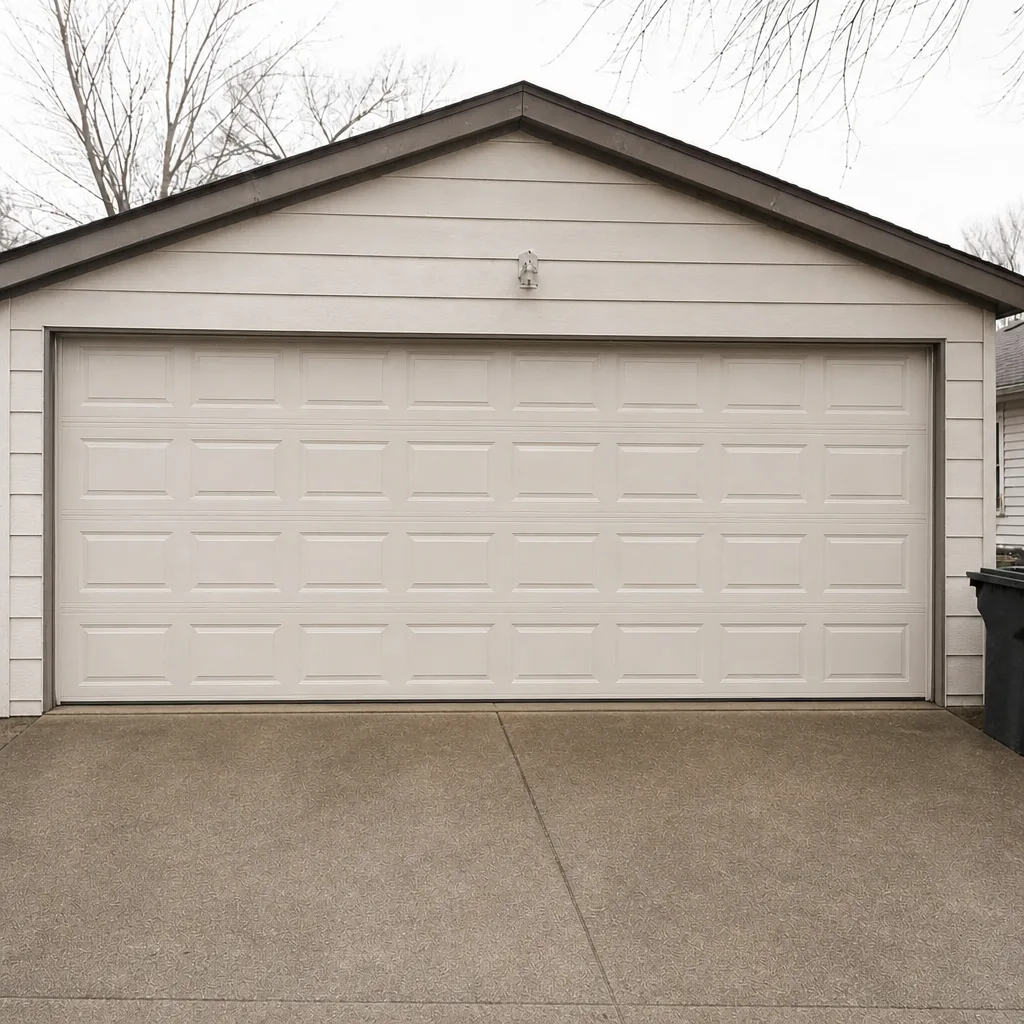 After
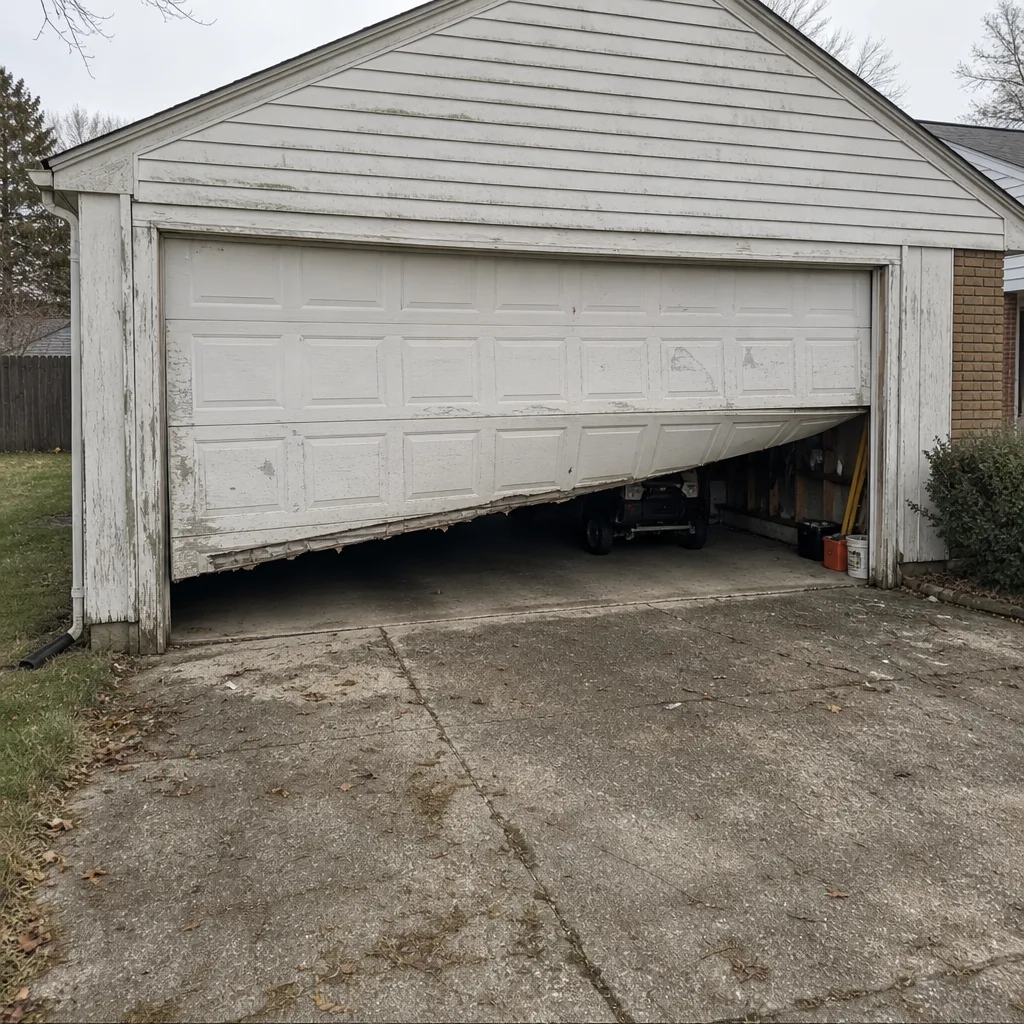 Before
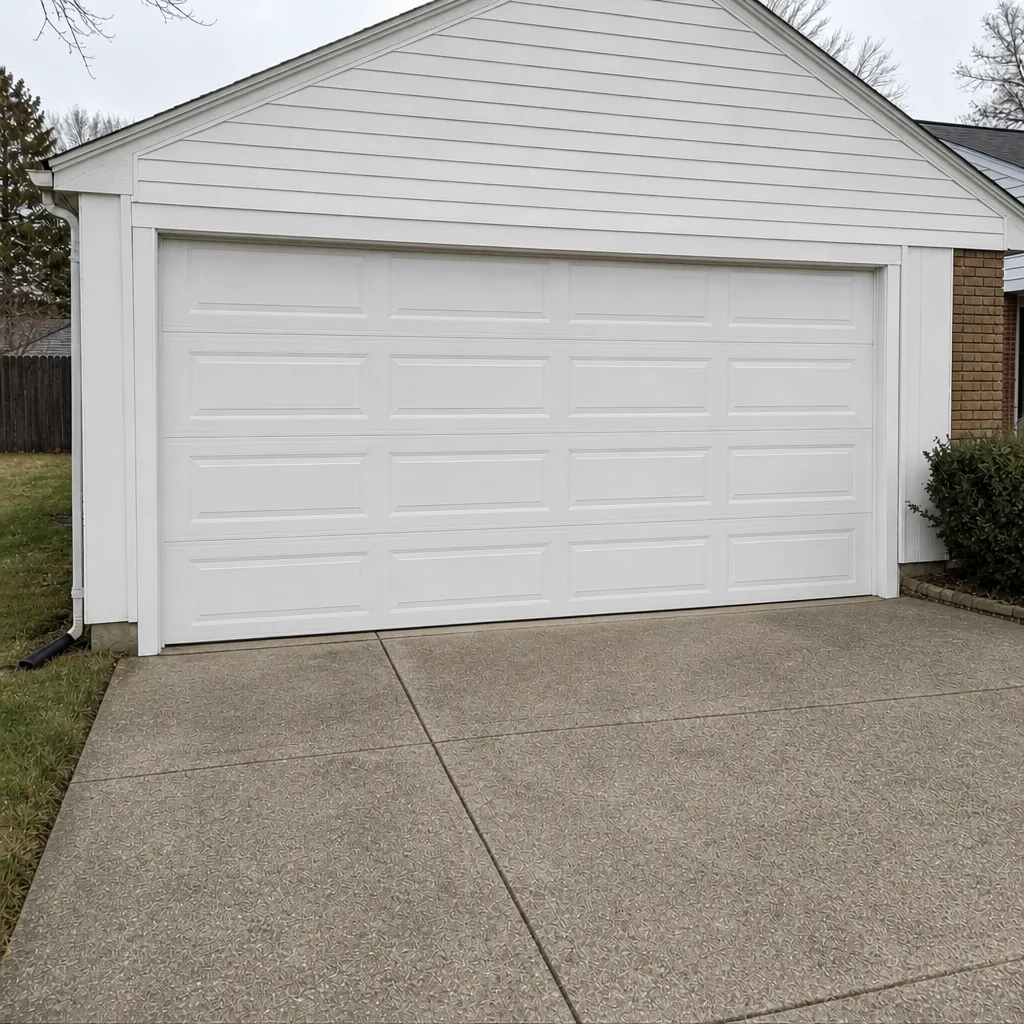 After
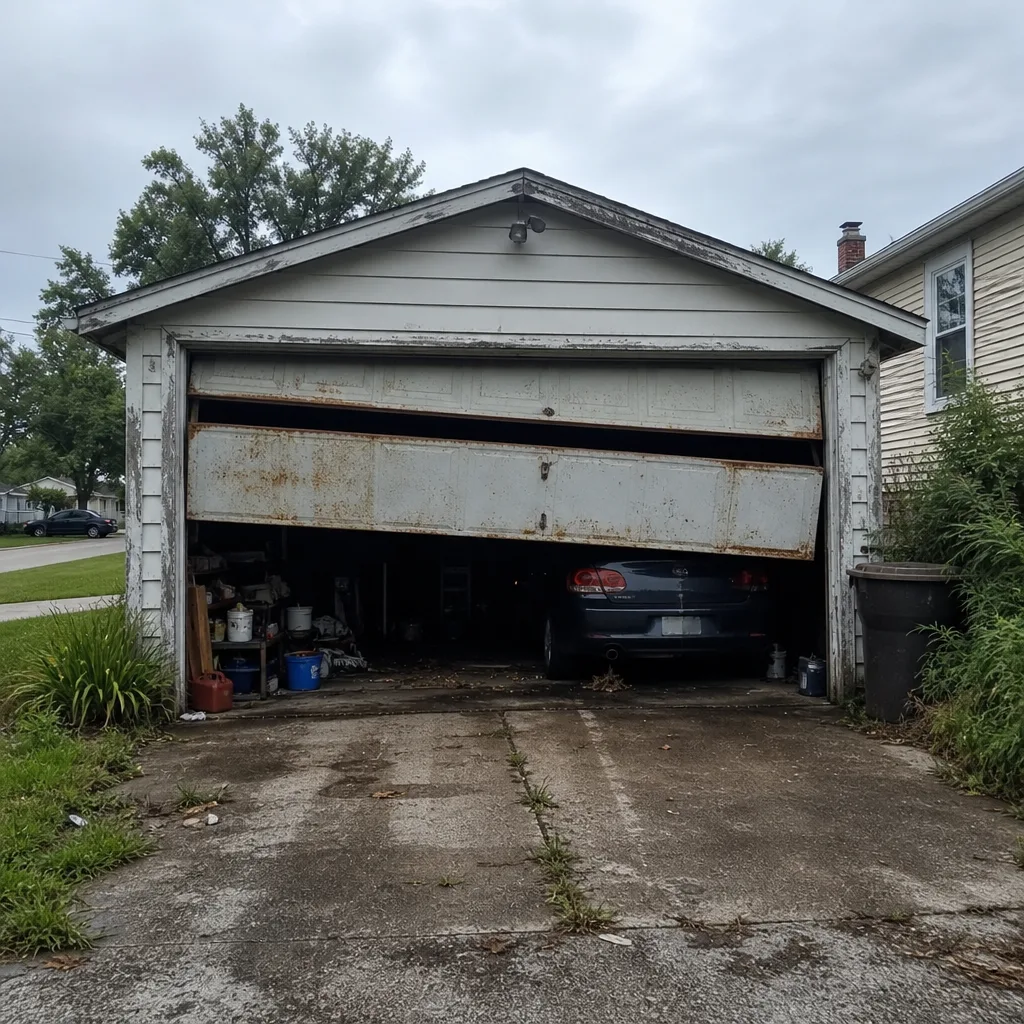 Before
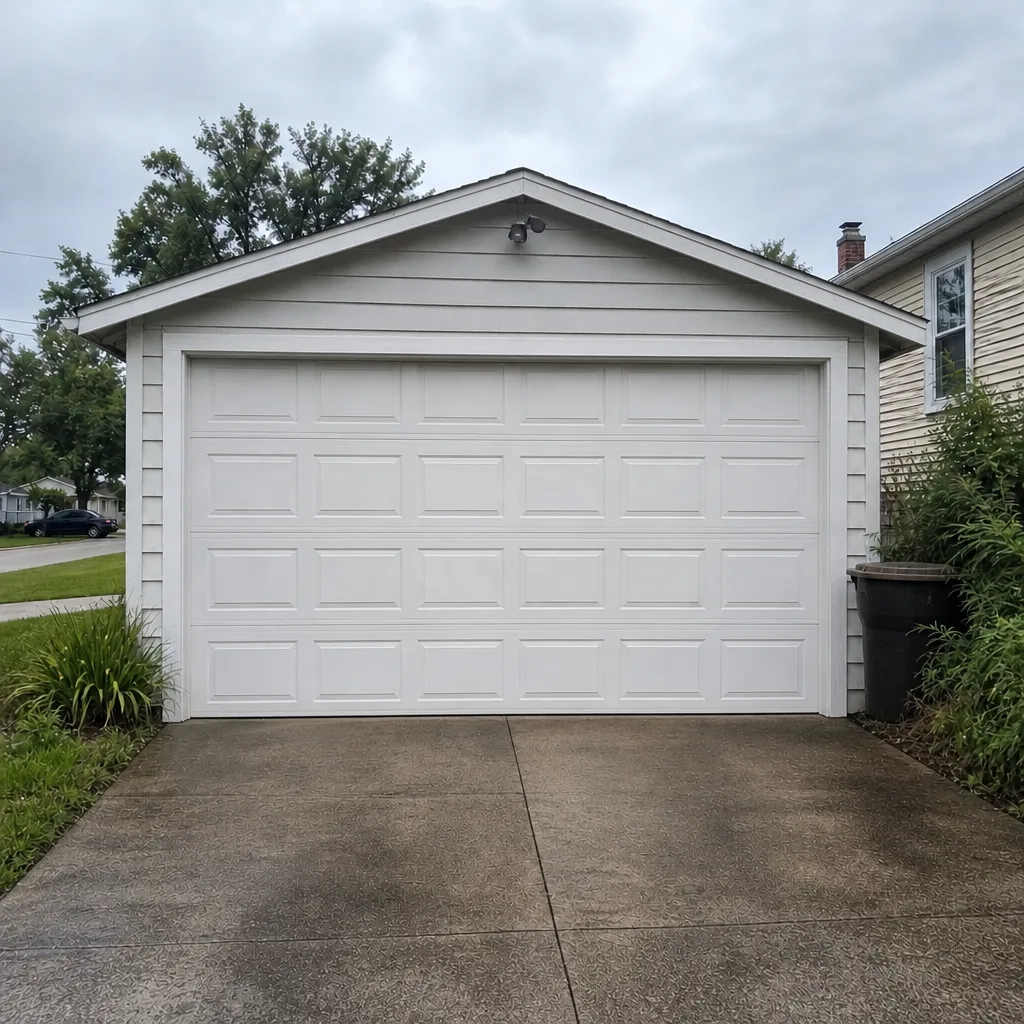 After
Common Mistakes to Avoid
- Ignoring a one-time noise. A single loud crack that never repeats is often a spring failure, not a fluke. Confirm the spring is intact before you use the door again, because a snapped spring turns a simple repair into a heavy, dead door the opener can’t lift.
- Blaming the remote before the board. In Lorain’s cold months, replace the remote battery only after you’ve tested the wall switch. If the wall switch is also intermittent, the opener’s logic board or receiver is the real problem.
- Forcing a drifting door. Running a door that’s off balance wears the track, the rollers, and the panels on one side. Stop and check for drift before the door scuffs its panels or comes off the track entirely.
- Winding your own springs. A torsion spring under tension is one of the most dangerous parts of the whole door assembly. Spring and cable work is a trained-specialist job, full stop.
- Painting over rust on a spring. Rust is a fatigue indicator. Covering it hides the sign of a weakening spring without fixing anything underneath.
- Assuming a generalist has seen your brand. Whether your opener is a LiftMaster, Chamberlain, or Genie, a contractor who services garage doors occasionally may misread a brand-specific fault. A dedicated specialist recognizes the symptom pattern faster and gets the right part the first time.
- Treating every warning as equally urgent. A squeak is a “book a service this week” problem; a gap in the spring coil is a “do not use the door” problem. Know which tier you’re in.
When to Call a Professional
Call a professional the moment any Tier 1 sign appears – a snapped or gapped spring, a frayed or off-drum cable, a door off its track, or a door that reverses or falls. These aren’t “schedule it” problems; they’re “stop using the door” problems, and leaving the door partly open or off its track leaves your home exposed. A door that won’t move or won’t close is a security issue, which is why emergency service is a real part of what we do, not an add-on. If any Tier 2 or Tier 3 signs show up, book a repair before they climb the tiers – the sooner a worn roller or a cold logic board is caught, the smaller the job. Lorain Garage Door Repair Pros offers free estimates in Lorain. Call (866) 937-7151. We answer 24/7. Fast dispatch from 7am to 7pm, Sunday through Friday.
Frequently Asked Questions
A visible gap in the coil and a stretched or shifted winding cone are the earliest clear signs a torsion spring is about to fail, followed by heavy-feeling door operation and rust streaks. A single sharp “ping” or “twang” is the warning shot. If you see any of these, stop using the door and call (866) 937-7151 for an exact quote – estimates are free.
An opener that works intermittently in cold weather is usually suffering from a temperature-sensitive logic board or receiver, not a dead remote battery. Test the wall switch first: if it’s also intermittent, the board is the likely cause; if only the remote fails, replace its battery. Either way, call (866) 937-7151 if the problem keeps returning, and we’ll diagnose it properly.
Disconnect the opener with the release cord, lift the door slowly, and watch the gap between each side and the track. If one side is lower or closer to the track, or the door creeps sideways when you let go, it’s drifting. That points to a cable or balance issue. Call (866) 937-7151 before the drift turns into track or panel damage.
No. Springs and cables store serious energy under tension, and adjusting either without the proper bars, gauges, and training can cause severe injury. Those are jobs for a trained specialist. Call (866) 937-7151 and book a repair with someone who does this every day.
A door that reverses halfway down is usually an obstructed or misaligned safety sensor, not a failing opener. Clean both sensor lenses and check that each LED is steady. If the lights still look wrong, that’s a sensor replacement. Call (866) 937-7151 for an exact quote; estimates are free.
Repair cost depends on the specific component: a roller or sensor fix is a small job, spring and cable replacement is a larger one, and opener repair sits in between. The written estimate sets the final price, and you’ll know it before any work starts. Call (866) 937-7151 for a free estimate.
The Bottom Line
Garage door warning signs are a language, and each one has a speaker behind it: a spring losing tension, a cable fraying, a roller grinding, a cold logic board. The point of this guide is to help you sort those signals into “watch,” “act this week,” and “stop now.” A slower door or a new noise is worth a call; a gap in a spring or a frayed cable is worth stopping the door and calling immediately. A five-minute monthly check catches most of it early. If anything here looks familiar, the fastest way to a decision is to call and describe it. Our technicians have up to 13 years of experience turning what you’ve noticed into a clear diagnosis. Trust the sign, not the wishful thinking.
Call Lorain Garage Door Repair Pros at (866) 937-7151 for a free estimate. We answer 24/7. Fast dispatch from 7am to 7pm, Sunday through Friday. If you’d like to see how our whole trade fits together, start at Lorain Garage Door Repair Pros.
Written by the team at Lorain Garage Door Repair Pros.