
Last updated November 21, 2026
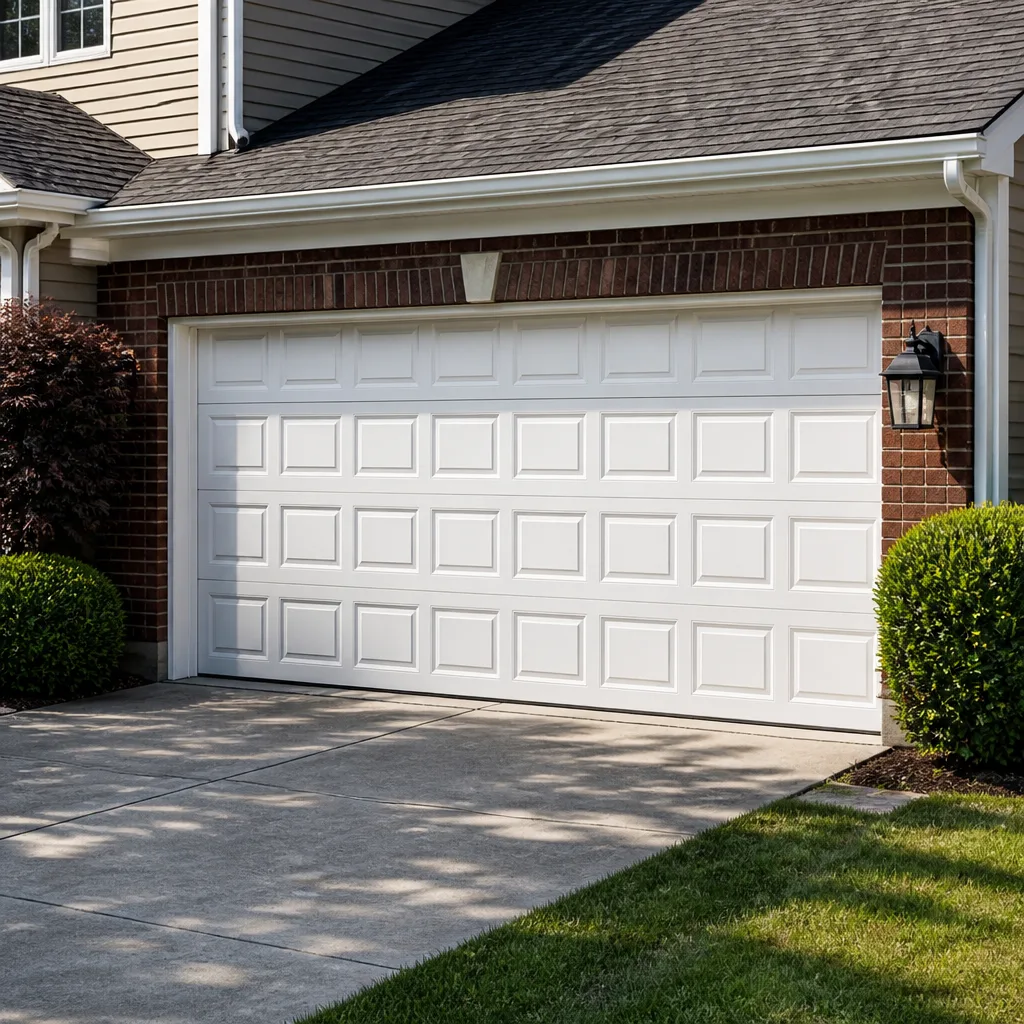 Raised-panel steel
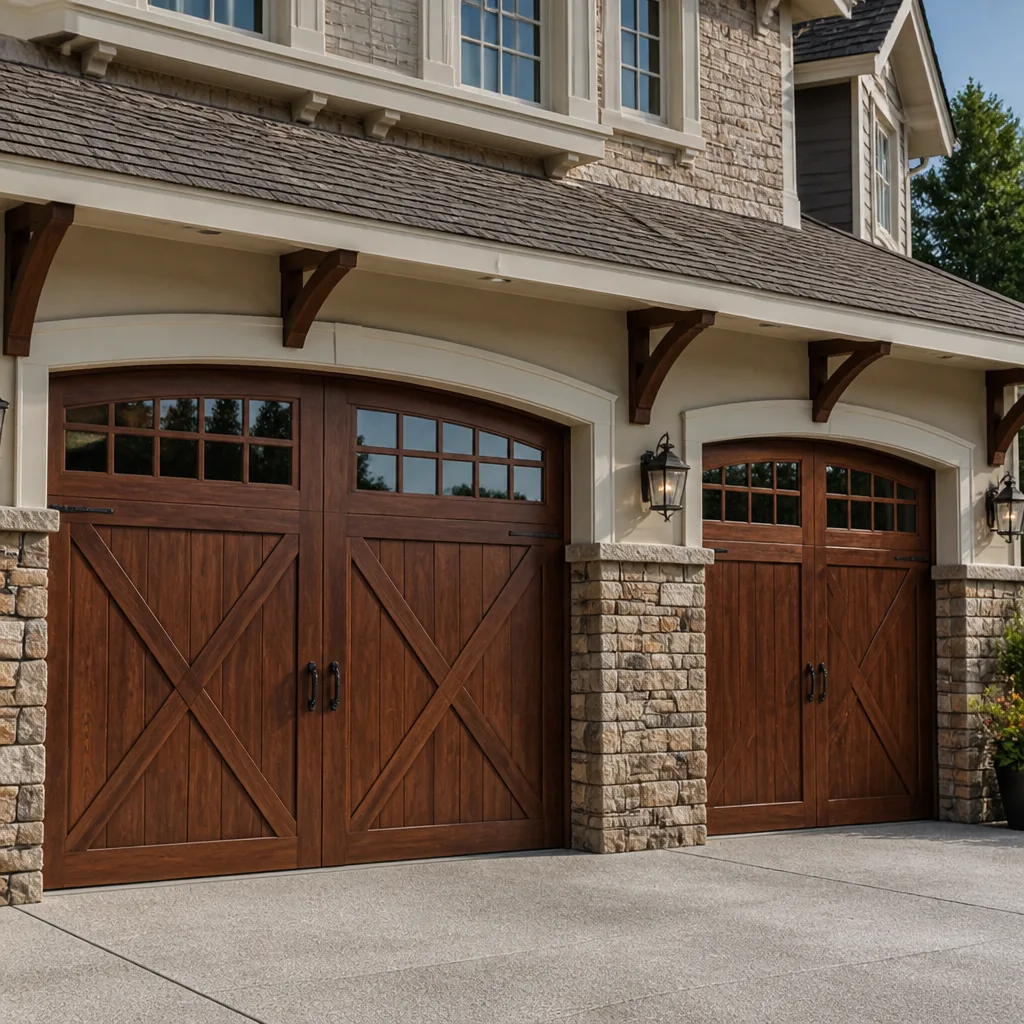 Carriage house
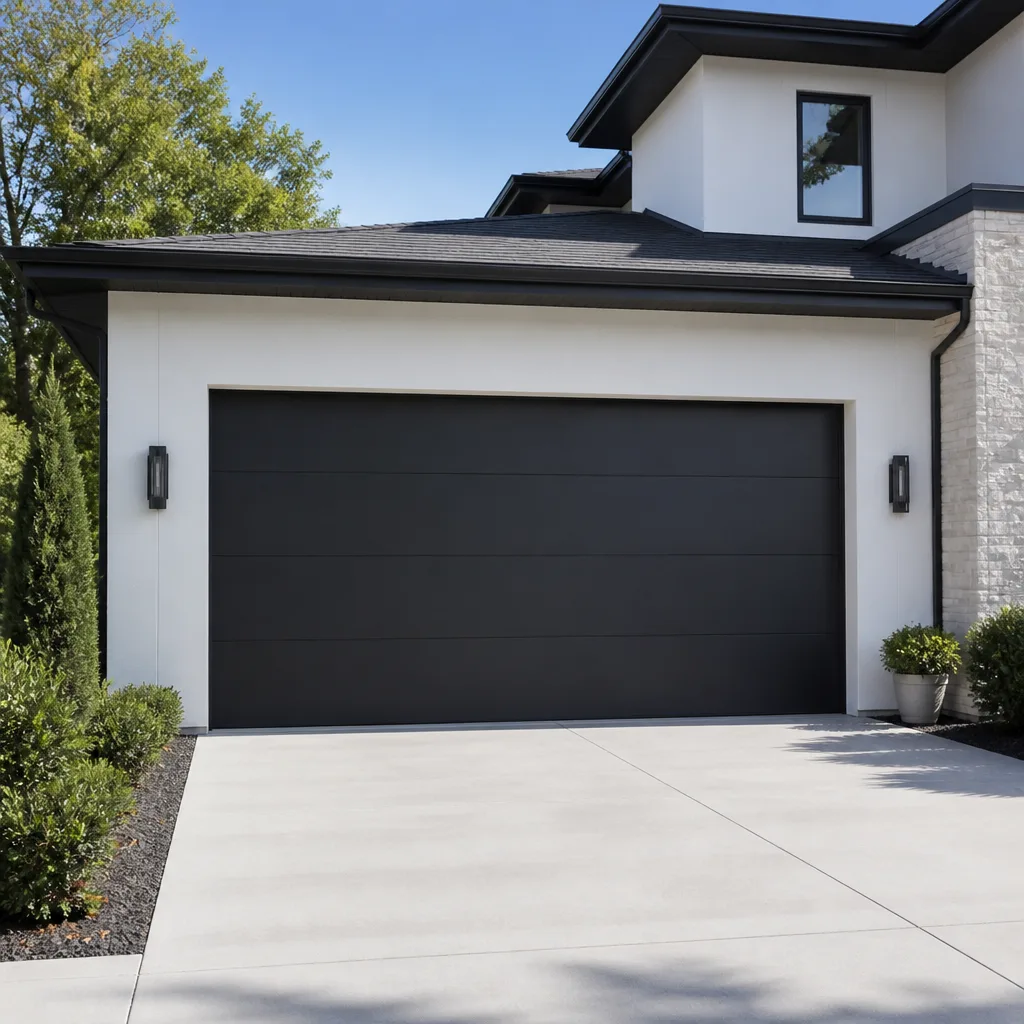 Modern flush
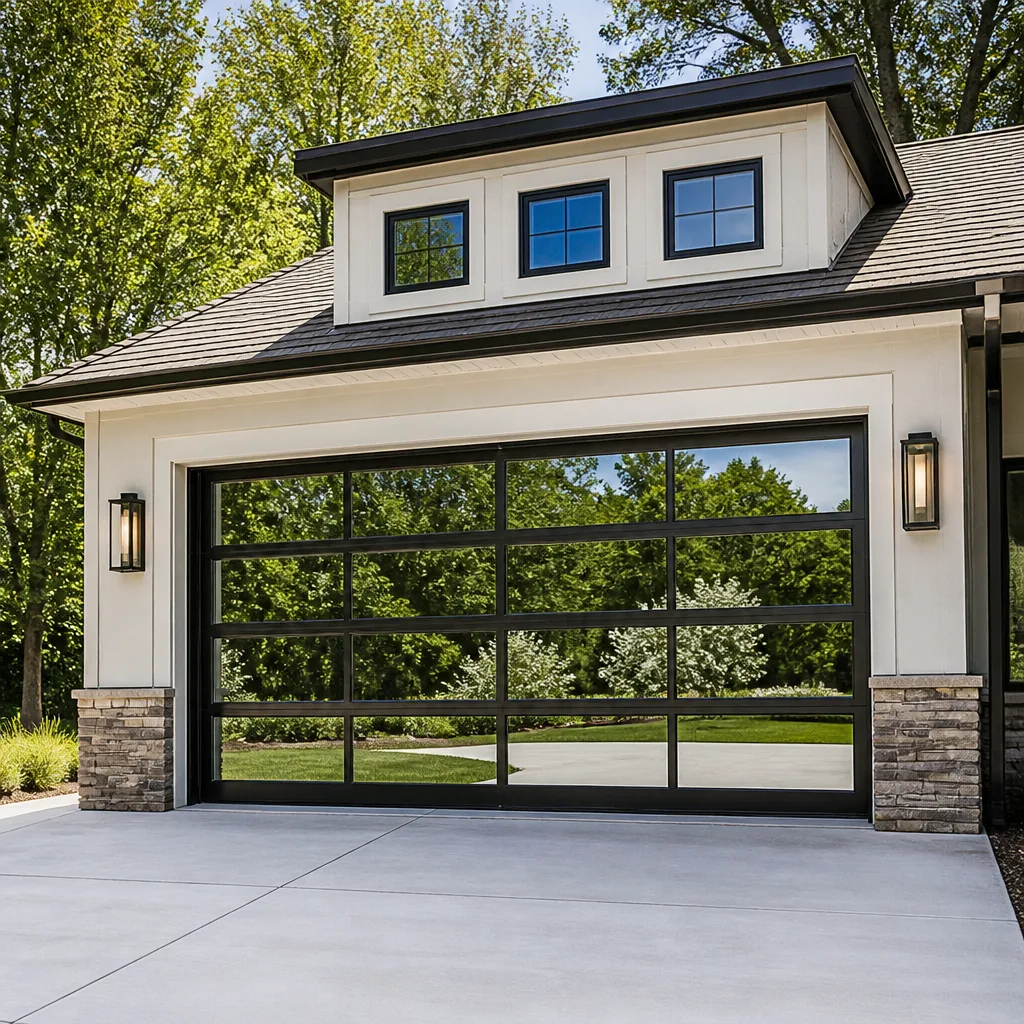 Full-view glass
 LiftMaster openers
 Chamberlain openers
Full 25-point door and opener safety check with every visit - springs, cables, rollers, tracks, and your LiftMaster or Chamberlain opener included
You get a price before we start. It does not change when the pro arrives.
Get your free estimateSeasonal Garage Door Care for Lorain: Year-Round Homeowner’s Guide
February is the worst month to discover your bottom seal has been leaking cold air since November. But it’s the month most Lorain homeowners find out. The garage is the one room in the house we walk past every day and inspect almost never, so small problems hide in plain sight until cold weather or long use forces them into view. A seasonal approach fixes that. Lorain’s calendar is unforgiving: lake-effect winters that lock hardware in ice, a spring thaw that works on every fastener and track anchor, humid summers that swell wood panels, and road salt that eats at the seal and bottom hardware through the whole cold season. This guide gives you a month-by-month schedule built around those specific stress points, so you’re adjusting and inspecting at the right time instead of reacting after something fails.
Quick Answer
Seasonal garage door care in Lorain follows a simple rhythm: tighten and lubricate hardware and free up the bottom seal before the first hard freeze in late November, check track alignment through the December-to-March freeze-thaw cycle, inspect for road salt damage and wood swelling during the spring thaw and humid summer, and balance and test the whole system again in early fall. The three jobs that prevent most winter failures are hardware tightening, seal replacement, and a spring and cable inspection done by a specialist before temperatures drop. If you’d rather have the whole routine handled by someone who does only this work, that’s exactly what Lorain Garage Door Repair Pros is set up for.
Styles & brands we work with
- Raised-panel steel
- Carriage house
- Modern flush
- Full-view glass
- LiftMaster openers
- Chamberlain openers
Table of Contents
- The Lorain Seasonal Care Schedule at a Glance
- Pre-Winter Prep: What to Do Before the First Significant Freeze
- Freeze-Thaw Cycles and Track Misalignment: Why It Happens and How to Stop It
- Spring Thaw and Salt Season: What a Lorain Winter Does to Your Seal and Hardware
- Summer Humidity: Wood Panels and Trim in Older Lorain Housing
- Opener Care Through the Seasons
- Month-by-Month Action Calendar for Lorain
- Common Mistakes to Avoid
The Lorain Seasonal Care Schedule at a Glance
Treat your garage door like a seasonal item, not a background appliance. Here’s the whole year in one view, and every item below is expanded in the sections that follow:
- Late October to mid-November (before first freeze): tighten every hinge and bracket bolt, lubricate springs, rollers, and hinges, replace a cracked bottom seal, and confirm the door closes fully against the threshold.
- December through March (freeze-thaw): listen for the door binding, watch the gap at the bottom corners, and check that the track hasn’t shifted at its floor anchors.
- March through May (thaw and salt season): inspect the bottom seal and lower hardware for salt damage, look for rust bloom on hinges and springs, and check for wood swelling.
- June through August (peak humidity): watch wood and wood-composite panels for swelling, sticking, and paint failure, especially on doors facing the sun most of the day.
- September through October (fall reset): balance check, full safety-reverse test, and a specialist visit for springs and cables before the cold returns.
That’s the shape of the year in Lorain. The details are where the work is.
Pre-Winter Prep: What to Do Before the First Significant Freeze
Lorain’s first significant freeze event typically lands in late November. The work to get ready for it needs to happen in the weeks before, while your fingers still work outside. Concentrate on four hardware adjustments:
- Tighten every hinge, bracket and bolt on the track. Vibration over a full season loosens fasteners gradually. A bolt that’s snug in October can be rattling by January, and the small movement it allows is enough to let a roller jump or a track drift.
- Lubricate springs, hinges and rollers with a garage-door-specific lubricant. Not WD-40, not motor oil. A proper lubricant stays put at low temperature instead of gumming up and slowing the door down when it’s cold.
- Replace a cracked or flattened bottom seal. This is the single most common winter problem we see. A hard, cracked seal lets cold air and snow melt in along the floor, and it also changes how the door seats, which can trip the safety reverse. If you press the seal with your thumb and it doesn’t spring back, it’s done.
- Confirm the door closes fully and evenly against the threshold. With the door down, look along the bottom from inside. A visible light gap at one corner means the door isn’t level, and that gap will run cold all winter.
While you’re out there, check that the weatherstripping along the top and sides of the frame is intact too. Cold air comes in at the edges as well as the bottom, and Lorain winters punish every gap.
Freeze-Thaw Cycles and Track Misalignment: Why It Happens and How to Stop It
Between December and March, Lorain gets repeated freeze-thaw cycles. Water gets into the ground and into the frame around your door, expands when it freezes, and contracts when it thaws. The effect on a garage door is predictable and repeatable: the vertical tracks start to drift, and the bottom of the door starts to bind.
Here’s the pattern. The track’s floor anchor sits in concrete that freezes and moves. The upper track is held to the jamb, and the jamb wood expands and contracts with the same cycle. Over a winter of this, the tracks can go out of plumb by a small amount that’s enough to make the door rub. You’ll notice it as a scraping sound at one side, a door that pauses partway down, or a gap at one corner when closed.
The single adjustment that prevents most of it: check that the track bolts are tight before the freeze and check again mid-winter after the first deep cold snap. A track that’s anchored tight doesn’t drift as much, because the movement has less play to work with. Loosening the track and nudging it back into plumb is the fix, but do it only after the freeze has settled for the year – adjusting a track while the ground is still heaving just means redoing it later.
Also important: don’t try to force a binding door through the winter. A door that’s rubbing in January is stressing springs and the opener all season, and it may fail outright when the spring has taken the wear. If your door is sticking, that’s a good time to call for a garage door repair visit rather than wait for warmer weather.
Spring Thaw and Salt Season: What a Lorain Winter Does to Your Seal and Hardware
A Lorain winter ends with the roads coated in salt and that salt tracked across your driveway and into your garage. The damage isn’t immediate, but it’s cumulative, and the spring thaw is when you assess it.
Road salt and the meltwater that carries it attack the bottom seal faster than anything else on the door. Salt dries out the rubber, and a seal that was soft in October can be hard and split by March. The lower hinges, the bottom bracket area and the rollers are the next to go. Salt also accelerates corrosion on the steel track at the floor, where meltwater pools and sits longest.
Here’s how to assess the damage in early spring:
- Run your hand along the bottom seal. Feel for hard spots, cracks or a flattened profile. If the seal has lost its spring, replace it before summer heat bakes it harder.
- Look at the lower hinges and bottom brackets for rust bloom. A little surface rust on a hinge pin is fine and can be cleaned. Flaking or pitted metal means the part has weakened and should be swapped.
- Check the track at the floor for corrosion. The area where the track meets the ground sees the most saltwater. If the track is corroded there, the door is riding on a compromised surface.
- Wipe down the bottom hardware and dry it. A quick clean after the thaw slows the corrosion cycle. Do this once, right when the last road salt is gone.
The spring thaw also brings the year’s highest risk of a track that’s been pushed out of alignment by the winter’s ground movement. That’s why the spring inspection matters as much as the fall one.
Summer Humidity: Wood Panels and Trim in Older Lorain Housing
Lorain’s summer peak humidity usually hits in July and August. For most garage doors, it’s not a problem. For wood and wood-composite doors, especially on the older housing stock where a wooden door is still in place, it’s the season that does the most quiet damage.
Wood absorbs moisture through its end grain and through any spot where the paint has failed. The panel swells. It swells unevenly, because the edges at the joints take on water faster than the center. That’s why a wood door in August can suddenly start to stick, scrape, or bow in one section while the rest of it looks fine. Wood-composite trim around the frame behaves the same way and can pull away from the wall.
What to do through the summer:
- Look for paint failure on the bottom rail and panel edges first. That’s where water sits and where the paint fails first.
- Check the door for sticking or scraping in the morning versus afternoon. If the door sticks more in the afternoon, you’re seeing humidity swelling, not a track problem.
- Keep the bottom seal in good shape. A bad seal lets splash water in at the base of the door, which is the worst-case scenario for wood.
- Repaint failing wood before the fall. Once cold weather comes, paint won’t cure properly and the wood goes into winter unprotected.
If a wood door has gone beyond swelling into rot, patching stops being the answer. A full replacement is the cleaner path, and the newer doors available in the Clopay and Amarr lines are a big upgrade over old wood in a Lorain climate. It’s worth talking through before you spend on another repair.
Opener Care Through the Seasons
The opener is the part of your garage door system that gets blamed for problems that actually come from the door itself. A door that’s out of balance or binding puts extra load on the opener motor, and the opener’s safety systems start tripping. Seasonal care on the opener is mostly about keeping it from having to work harder than it should.
- Test the safety reverse twice a year. Put a small object on the floor under the door and close it. The door should reverse on contact. Do the same test with the photo-eye sensor blocked. If either test fails, the opener needs attention before the door is used again.
- Lubricate the opener’s chain or screw drive once in the fall. A dry chain is a noisy chain, and noise usually means wear. We work on LiftMaster and Chamberlain systems regularly, and their drives take a different lubricant, so check your model’s manual before you reach for the can.
- Balance-check the door before the opener gets blamed. Disconnect the opener and lift the door halfway by hand. It should stay there without help. If it drops or rises on its own, the door is out of balance and that’s a spring job, not an opener job.
- Watch for a Genie or Craftsman opener that’s cycling oddly. If it opens but won’t close, or beeps and reverses, the problem is usually a sensor or a door-binding issue, not the motor itself.
When the opener does need repair, it’s worth having a technician who works on these systems every day take a look rather than guess at it. Our garage door opener repair covers the full range of the brands we service.
Month-by-Month Action Calendar for Lorain
Here’s the schedule to put on the fridge. It’s built around Lorain’s typical dates: first significant freeze in late November, last frost in spring, peak humidity in July and August.
- Late October and early November: tighten hardware, lubricate springs and hinges, replace the bottom seal, check that the door closes fully. This is the most important month for a Lorain homeowner.
- December: after the first hard freeze, check the track bolts once more and listen for binding. If the door sounds different than it did in October, that’s your warning.
- January and February: the freeze-thaw cycle is at its peak. Watch for track drift, gaps at the bottom corners, and a door that hesitates. Don’t force it through a bind.
- March and April: after the thaw, inspect for salt damage, rust on lower hardware, and a hardened or split seal. Clean and dry the lower hardware.
- May: a good month for a full safety-reverse test and balance check before summer heat arrives.
- June, July, August: watch wood panels and wood-composite trim for swelling, sticking and paint failure. Catch failing paint early.
- September: pre-fall reset. Balance check, full hardware check, and schedule a specialist inspection of springs and cables before the cold returns.
- October: replace any failing seal, repaint wood before cold weather, and prep for the November freeze.
If you do one thing every year, make it the fall prep. Everything else is easier when the fall prep is done on time.
Common Mistakes to Avoid
- Using the wrong lubricant. WD-40 and general-purpose oils attract dust and get sticky in cold weather. They slow the door down and wear the rollers.
- Ignoring a leaking bottom seal through the winter. A cracked seal is easy to replace in October. In February, it’s the reason a homeowner is dealing with cold air and a safety-reverse trip.
- Forcing a binding door through a freeze. A door that scrapes in January is loading up the springs and the opener with every cycle. Stop using it and get the track checked.
- Adjusting a track while the ground is still heaving. In a Lorain freeze-thaw cycle, the ground moves through the whole winter. Fix the track in spring or late fall, not in the middle of a freeze.
- Paying for an opener repair when the door is out of balance. A worn spring loads up the opener motor. The opener wasn’t the problem, and it will keep failing until the spring is fixed.
- Letting wood doors go into summer without paint. Once paint fails on a wood door, every humid July weakens the panel a little more. Repaint before June, not in August.
- Trying to adjust springs or cables yourself. Springs are under extreme tension and can cause serious injury if they let go. Leave spring and cable work to a specialist – the risk isn’t worth it, and it’s the exact job garage door spring repair is designed for.
See the difference
 Before
 After
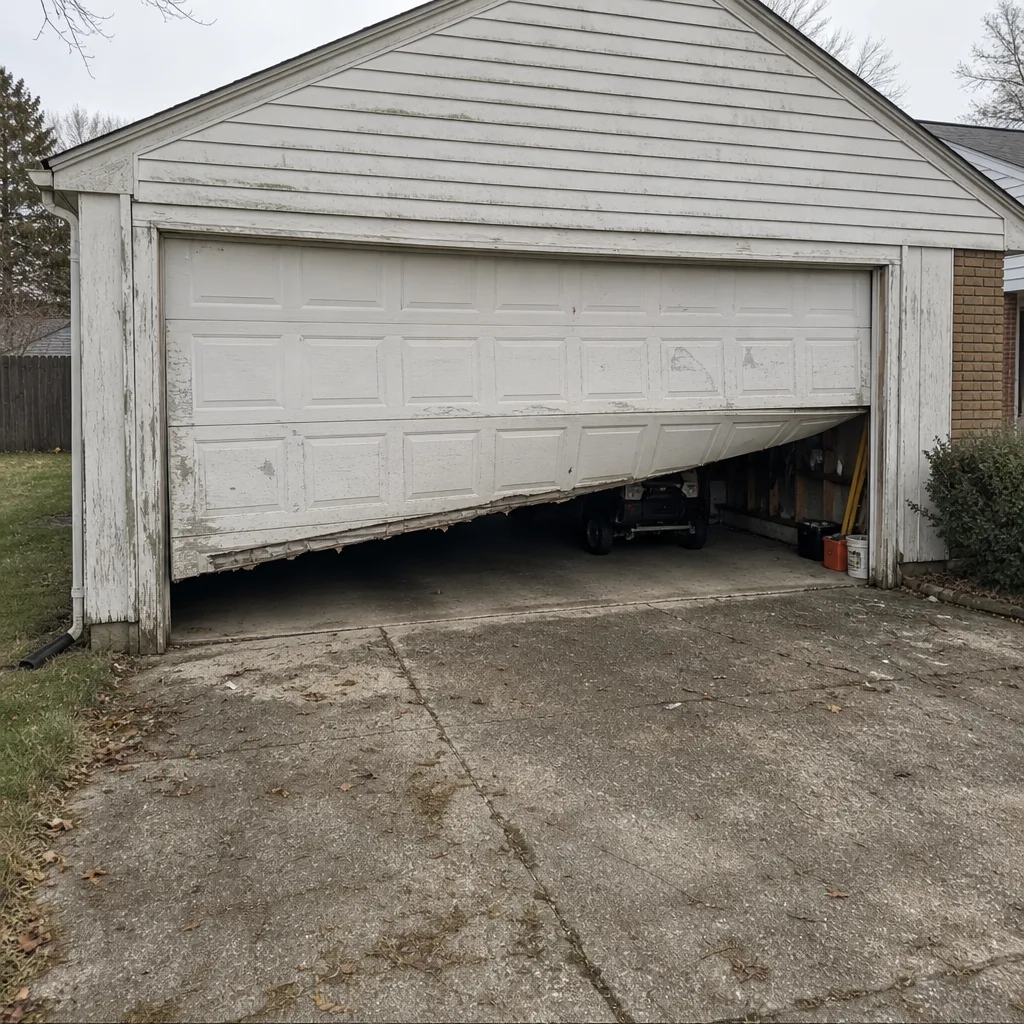 Before
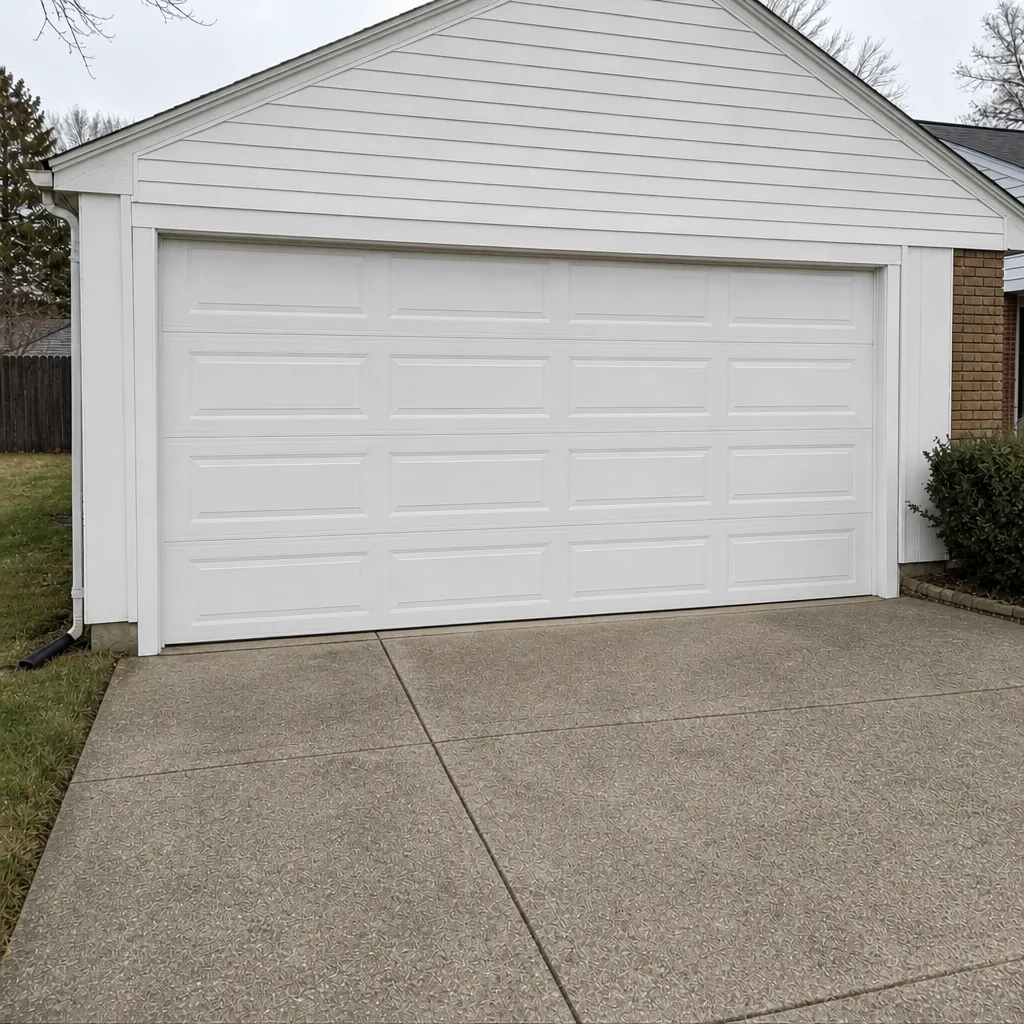 After
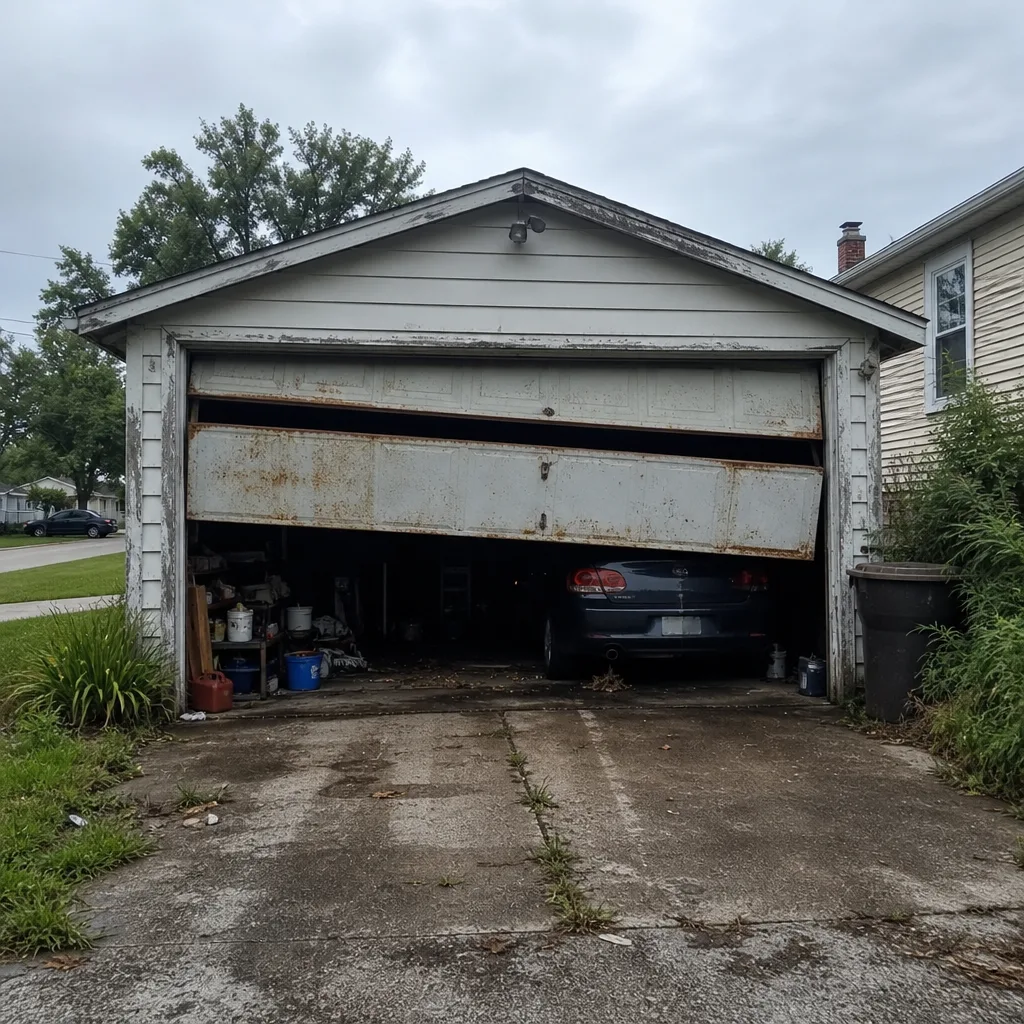 Before
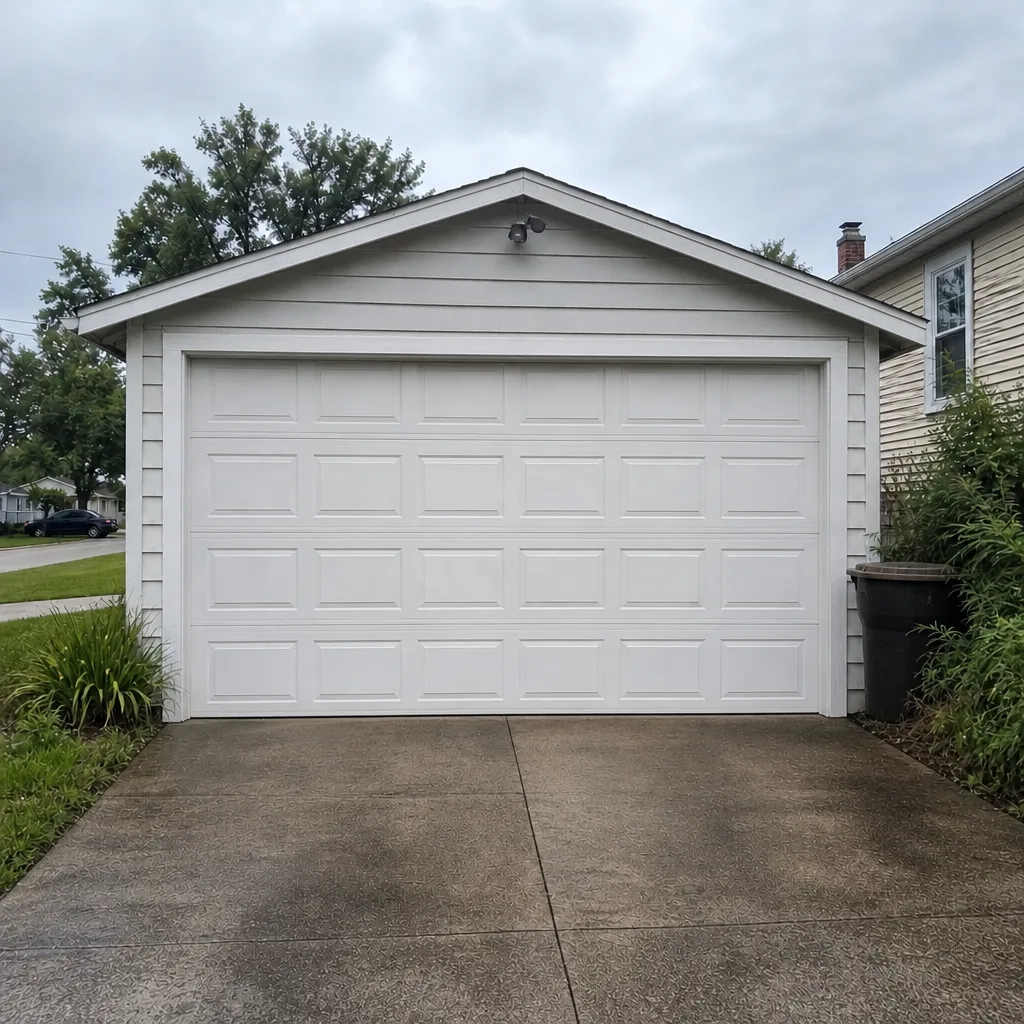 After
When to Call a Professional
Some seasonal care is a homeowner job: tightening a hinge, cleaning a seal, wiping down salt residue. Some isn’t. Call a specialist if any of these apply: your door is binding or making a new noise, one side lifts higher than the other, the bottom seal is split or won’t seal against the floor, a spring shows visible wear or the door feels much heavier than usual, the opener trips the safety reverse repeatedly, or you have a door that simply won’t close and you need it addressed quickly. Spring and cable work is a safety job – a failed spring can snap with enough force to injure someone standing nearby, and the adjustment afterward takes a trained eye. Lorain Garage Door Repair Pros offers free estimates in Lorain. Call (866) 937-7151. We answer 24/7. Fast dispatch from 7am to 7pm, Sunday through Friday. If you’re dealing with a door stuck open, we also handle emergency garage door service as a core part of what we do, because a door that won’t close leaves the house open.
Frequently Asked Questions
The fall prep in late October and early November. Tightening the hardware, lubricating the springs and hinges, and replacing a failing bottom seal before the first freeze prevents most winter problems. Everything else in the calendar is easier when the fall prep gets done on time.
Freeze-thaw cycles between December and March move the ground and frame around the door, and that drifts the track out of alignment. Cold also thickens lubricants and hardens seals. If your door sticks in winter and runs smoothly in summer, it’s usually a track or seal problem rather than the opener.
Once a year is a good baseline, and the best time is early fall, before the cold sets in. If your door is older, wood, or in an exposed position, twice a year – spring and fall – covers the freeze-thaw and humidity seasons separately.
Yes, and Lorain winters put a lot of it on the roads and driveways. Salt dries out the bottom seal and accelerates corrosion on the lower hinges, bottom brackets and the track where it meets the floor. A quick clean in early spring, once the last road salt is gone, slows the cycle significantly.
It affects wood and wood-composite doors more than anything else. Wood absorbs moisture, swells, and can start to stick or bow, especially where paint has failed. Metal doors are much less affected. If a wood door in Lorain starts sticking in July, look at the panel edges and bottom rail first.
When the damage has moved past surface swelling into rot, or when the paint has failed across multiple panels. Patching rot in a Lorain climate is usually a temporary fix. A new door from a modern line lasts longer and handles the humidity far better.
The Bottom Line
Lorain’s climate asks for a specific seasonal schedule, not a generic one. Clean, lubricate and seal in the fall so winter doesn’t find a weakness. Watch for track drift through the freeze-thaw months. Inspect for salt damage and wood swelling in the spring and summer. Do a full reset in early fall before the cold returns. Tighten the things you can tighten, and leave springs and cables to a specialist. Our technicians have up to 13 years of experience and work on the brands most Lorain homes already have – LiftMaster, Chamberlain, Genie, Clopay, Amarr, Wayne Dalton, Craftsman and Raynor. If you want the seasonal routine handled by a specialist who works on garage doors only, call (866) 937-7151 for a free estimate.
Written by the team at Lorain Garage Door Repair Pros.