
Last updated November 21, 2026
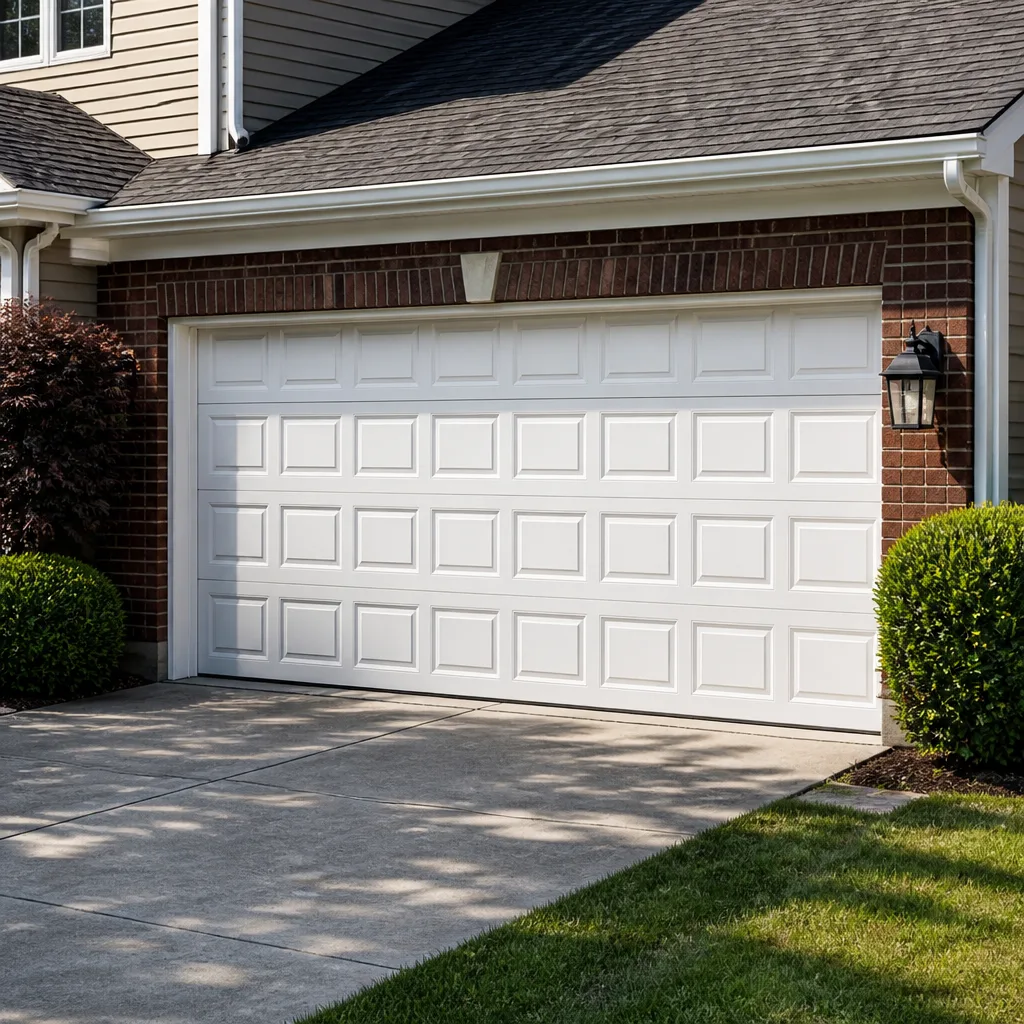 Raised-panel steel
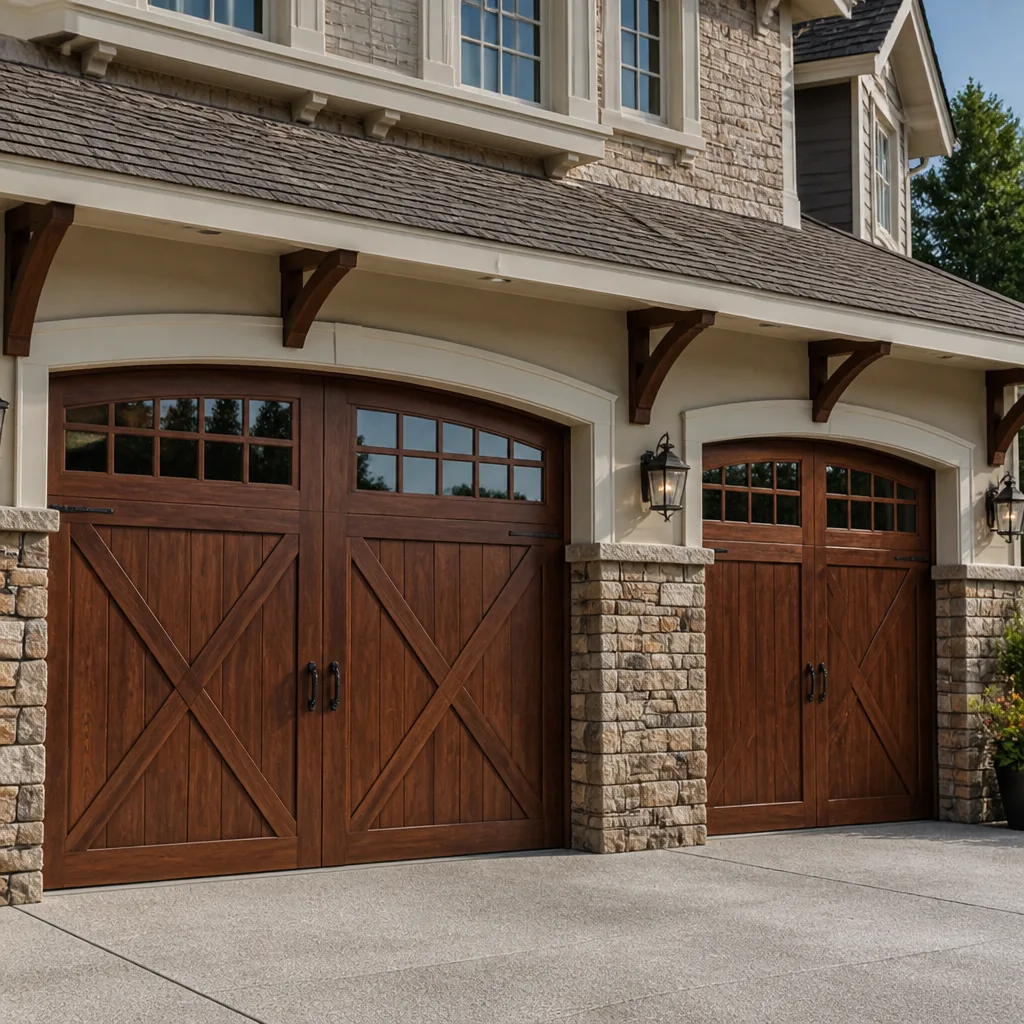 Carriage house
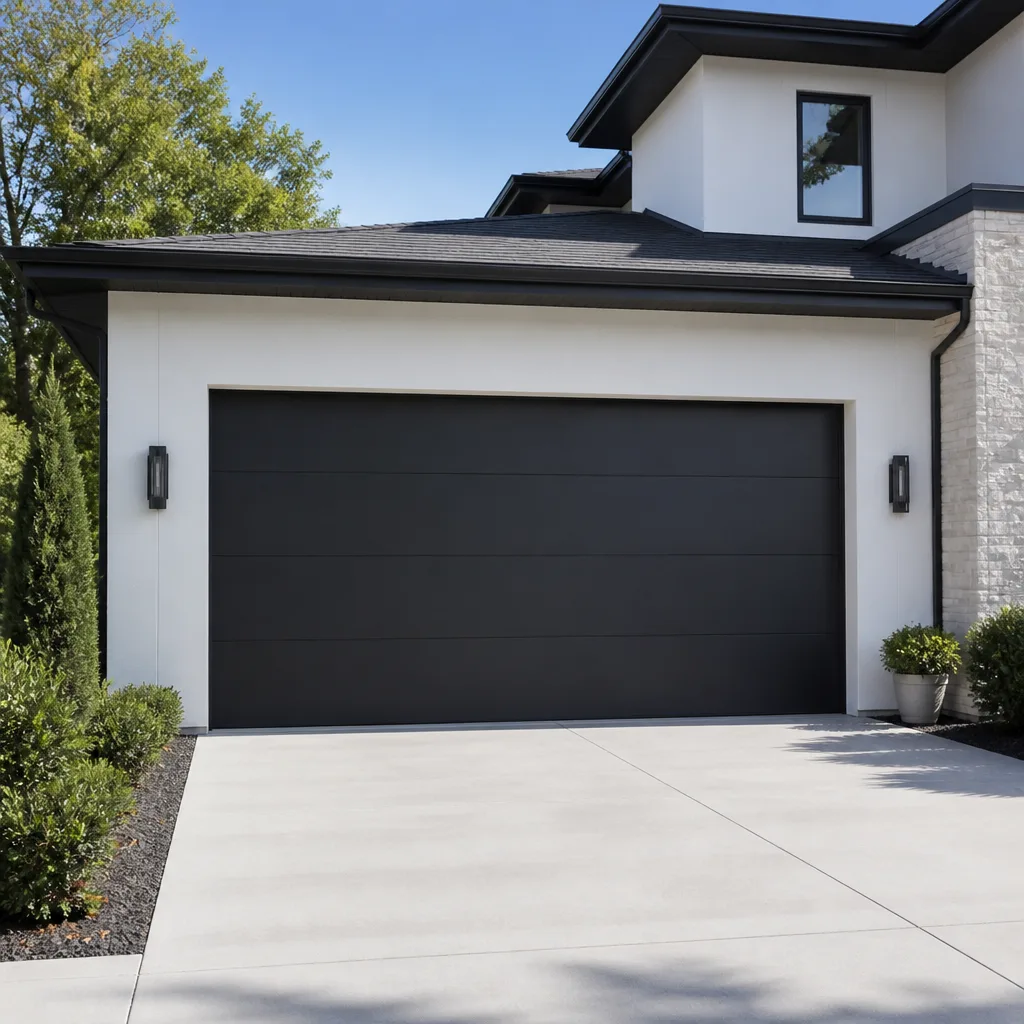 Modern flush
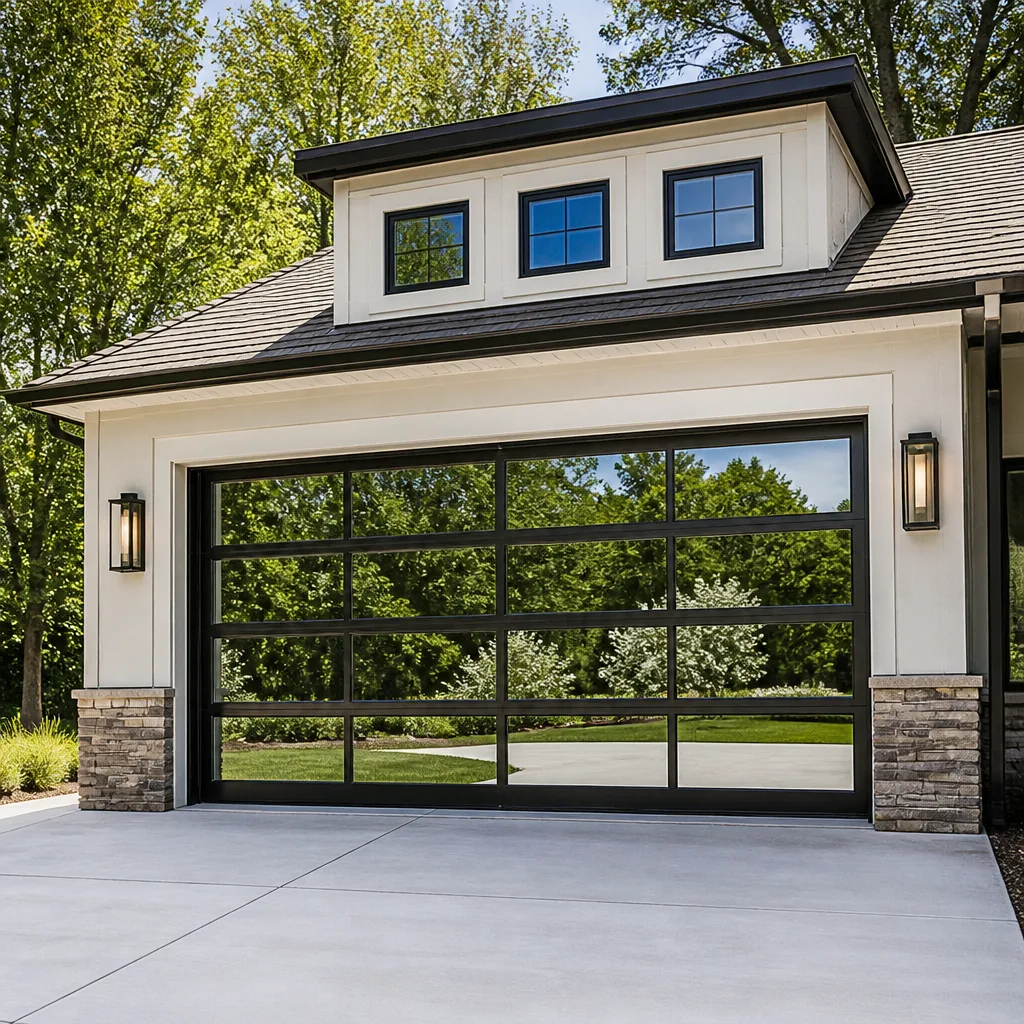 Full-view glass
 LiftMaster openers
 Chamberlain openers
Full 25-point door and opener safety check with every visit - springs, cables, rollers, tracks, and your LiftMaster or Chamberlain opener included
You get a price before we start. It does not change when the pro arrives.
Get your free estimateGarage Door Repair Maintenance Schedule: What to Do and When
Lubricating your garage door springs in July does almost nothing useful. Doing it in late October, before the first hard freeze settles over Lorain, is what actually prevents a snapped spring in January. That’s the part most maintenance schedules miss: timing matters as much as the task itself. A garage door isn’t one mechanism that ages evenly. It’s springs under constant tension, rollers rolling thousands of times a year, cables that stretch and fray, and weather seals that take every freeze-thaw cycle Northeast Ohio throws at them. Treat all of that with one annual checklist and the weakest component fails while you’re busy oiling the most durable one. Here’s a layered, month-by-month schedule built around how the hardware actually wears – and around the two windows each year where attention pays off the most.
Quick Answer
A garage door maintenance schedule should be seasonal and component-specific, not one annual task. Tackle the highest-leverage jobs in Lorain in late October (before the first hard freeze) and again in April (after the freeze-thaw season ends). Check springs and cables every six months, inspect rollers every twelve months, lubricate moving parts each fall, and replace weatherstripping when it stops sealing. Balance testing and track cleaning are homeowner tasks; spring tension work and cable drum inspection are professional jobs.
Styles & brands we work with
- Raised-panel steel
- Carriage house
- Modern flush
- Full-view glass
- LiftMaster openers
- Chamberlain openers
Table of Contents
- Why the Calendar Matters More Than the Checklist
- The Two Highest-Leverage Maintenance Windows in Lorain
- Component-by-Component Wear Intervals
- The Right Lubricant for Each Part (and What Not to Use)
- DIY vs. Professional: An Honest Split
- Warning Signs to Watch for During Routine Maintenance
- A Month-by-Month Maintenance Calendar
- Common Mistakes to Avoid
Why the Calendar Matters More Than the Checklist
Most garage door troubleshooting guides hand you the same list regardless of when you read it: oil this, tighten that, check the other. That advice is correct but incomplete. The reason a schedule beats a checklist is that garage door components don’t age at the same rate, and Northeast Ohio’s climate pushes different parts hardest at different times of year.
Consider what happens to a torsion spring over twelve months. It’s a coil of steel held under heavy tension, cycling with every open and close. Steel loses a little resilience with each cycle, but temperature drives the speed of that loss. In the heat of a Lorain summer, the metal expands and the tension eases slightly – the door may feel a touch heavier but usually works. Then the first hard freeze arrives. The steel contracts, the coil tightens, and a spring that was already near the end of its life lets go. That’s why spring failures cluster in the cold months: not because winter is uniquely hostile, but because it’s the final stress on a part that gave up 10,000 cycles ago.
The same seasonal logic applies to weatherstripping, which cracks and pulls loose through repeated freeze-thaw cycles along the bottom of the door, and to tracks, which contract in the cold and can pull out of alignment after a hard winter. The point is simple: the task matters less than the timing. If you’re going to check a spring once, check it in October. If you’re going to inspect the bottom seal once, do it in April, when you can see what winter did to it.
Everything in this guide assumes one thing: you’re maintaining a door you rely on daily. In Lorain, most homes use the garage as the primary entry, so the door cycles far more often than a weekend-only setup would. That higher use rate shortens the interval between checkups. Our technicians have up to 13 years of experience servicing doors of every brand in Lorain, and the pattern holds across all of them.
The Two Highest-Leverage Maintenance Windows in Lorain
If you remember nothing else from this guide, remember two dates: late October and early April. These are the two maintenance windows where an hour of attention buys the most. Here’s what each one involves.
Late October: Pre-Winter Prep
This is the most important window of the year. The goal is to get the door into winter in the best possible mechanical shape, before cold and contraction stress every part.
- Lubricate every moving metal-to-metal contact point – hinges, rollers, the torsion spring coil, and the opener’s rail and chain. Cold weather makes dry metal bind.
- Test the door balance by hand – disconnect the opener and lift the door halfway. It should stay put, not sag or drift. A door that won’t hold position means the spring is weakening and needs a look.
- Inspect the bottom seal – run your hand along the rubber. Cracks, hardening, or gaps at the corners mean it’ll leak cold air and moisture all winter.
- Clear the tracks – wipe out debris and check that the vertical and horizontal tracks are firmly bolted. Cold contraction can loosen brackets.
- Test the safety reverse – put a roll of paper towels under the door and close it. It should reverse on contact. Test the photo-eye sensors the same way.
Early April: Post-Winter Inspection
Winter is the hardest season on a garage door. April is when you find out what survived it.
- Check the springs and cables for obvious damage – look for a visible gap in the coil, or cables that look frayed or slack.
- Inspect the bottom weather seal – this is the component most likely to have failed over winter. Replace it if it’s split, brittle, or no longer touching the floor.
- Re-test door balance – if the door feels heavier than it did in fall, the spring has lost tension.
- Check the tracks for alignment – freeze-thaw cycles shift the ground and can knock tracks out of true.
- Do a full opener test – safety reverse, force settings, and light function. Older garage door opener repair issues often surface in spring after a winter of heavier-than-normal use.
These two windows are the backbone of the schedule. Everything else fills in between them.
Component-by-Component Wear Intervals
Each part of a garage door has its own wear cycle, and the interval between checks should match it. Here’s how we break it down:
- Springs (torsion or extension): Check every 6 months. This is the highest-tension, most failure-prone part of the system and the one to watch most closely. A visible gap in a torsion spring means it’s already broken; a door that won’t hold position means it’s on the way.
- Cables: Visual check every 6 months. Look for fraying, kinks, or slack. Cables under load should be taut with no loose strands. Never touch them under tension – that’s a professional inspection.
- Rollers: Inspect every 12 months. Metal rollers develop flat spots; nylon rollers crack. A roller with a flat spot won’t roll smoothly and puts extra strain on the rest of the system.
- Hinges: Lubricate annually, inspect for wear at the same time. Worn hinges cause the door to squeal and eventually sag.
- Weatherstripping / bottom seal: Inspect twice a year (October and April), replace when it stops sealing. In Lorain’s climate, a seal typically lasts a few years before cracking.
- Opener drive (chain, belt, or screw): Lubricate the rail and chain annually, test the safety reverse twice a year.
- Tracks: Clean and inspect twice a year. Look for dents, debris, and loosened bolts.
- Hardware (bolts, brackets, bearing plates): Tighten and check twice a year.
The intervals shift if your door gets heavy use. A door that cycles dozens of times a day – a busy family, or someone running a home business out of the garage – should be checked more frequently than these baselines suggest. If you’re ever unsure, the spring and cable checks are the two that matter most, because those are the parts that fail dangerously.
This applies whatever the door. Genie and LiftMaster openers, Clopay and Amarr doors – the wear patterns follow the same logic. We work on all of these brands regularly and the intervals below hold across the board.
The Right Lubricant for Each Part (and What Not to Use)
Using the wrong lubricant is worse than using none. White lithium grease gets recommended everywhere as a universal garage door lube, and it’s a genuinely bad choice for one critical part: torsion springs. Here’s the breakdown.
Where White Lithium Grease Works
White lithium grease is a fine choice for hinges, roller bearings, and the opener’s chain and rail. It’s a general-purpose grease that sticks well and resists being flung off. Spray a light coat on each hinge pivot and roller bearing, and run a small amount along the opener chain with a rag.
Where It Fails: Torsion and Extension Springs
White lithium grease is the wrong choice for springs. Here’s why: springs cycle under constant tension, and grease that thickens in cold weather can actually bind the coil and make the spring work harder instead of easing its job. In a Lorain winter, a grease that’s fine at 70 degrees can turn gummy at 20. Worse, thick grease traps grit, which grinds against the coil.
The right choice for torsion springs is a dedicated garage door spring lubricant or a light spray lubricant with a low-viscosity base that penetrates the coil and doesn’t gum up in the cold. Silicone spray is a common stand-in. Apply lightly – a thin coat, not a heavy drench.
Other Key Pointers
- Never use WD-40 as a lubricant – it’s a solvent/water displacer that strips existing lubrication and evaporates quickly. It makes things worse over time.
- Don’t use motor oil – it drips, stains the floor, and attracts dirt.
- Use silicone spray on weatherstripping – it keeps rubber from drying out and cracking.
- Keep lubricant off the tracks themselves – tracks should be clean and dry; grease traps debris and can stop rollers from rolling properly.
One critical caution: lubricating a spring does not make it safe to inspect up close. A torsion spring stores enormous energy, and a visual gap is the only thing a homeowner should be looking for. If you see one, stop. Spring work requires a trained technician, not a homeowner with a can of spray lube. Our teams handle garage door spring repair as a standard part of what we do, precisely because it’s a job that shouldn’t be handled any other way.
DIY vs. Professional: An Honest Split
Some maintenance genuinely belongs in your hands. Some simply doesn’t. Getting this split right is the difference between a well-maintained door and a dangerous one.
Tasks You Can Own
- Cleaning the tracks – wipe them with a damp rag, no grease afterward.
- Testing the balance by hand – disconnect the opener, lift halfway, see if the door holds.
- Testing the safety reverse – the paper-towel test described above.
- Lubricating hinges, rollers, and the opener rail – light coats with the right product.
- Replacing weatherstripping and the bottom seal – a genuine DIY job with basic tools. Cut to length, push into or nail onto the retainer, done.
- Tightening visible bolts and brackets – snug, not overtight. Don’t touch the spring mounting hardware.
- Cleaning the photo-eye lenses – a rag on each sensor goes a long way.
Tasks That Need a Technician
- Spring tension adjustment or replacement – torsion springs are under enough tension to cause serious injury if they release unexpectedly. This is the category where we most strongly urge calling a pro.
- Cable drum inspection and cable replacement – cables can snap under load with no warning. A visual look is fine; anything more is a technician’s job.
- Panel replacement or straightening – a bent or dented panel affects alignment and can be a structural safety concern.
- Opener electrical work and logic board diagnosis – diagnosing a specific opener fault correctly takes the right test equipment and model knowledge.
- Track realignment after a hard hit – a door that’s been hit or jumped a track needs a professional to realign the tracks without damaging the frame.
- Spring, hinge, or roller replacement – if a roller’s gone or a hinge is worn out, replacement is straightforward for a trained tech but easy to get wrong at home.
If a task involves a spring, a cable under tension, or wiring, stop and call. If it involves a rag, a spray can, or a screwdriver on a visible bolt, you’re probably fine. When in doubt, our garage door repair team will tell you honestly which category a given task falls into.
Warning Signs to Watch for During Routine Maintenance
Routine maintenance isn’t just about doing the tasks – it’s about noticing what the door is telling you. These are the signals our technicians look for during a check, and the ones a homeowner should learn to recognize:
- A fraying cable – a single broken strand on a cable means the whole cable is on its way out. Don’t run the door more than necessary before it’s replaced. A snapped cable is dangerous and can drop one side of the door.
- A roller with a flat spot – a roller that thumps instead of rolls smoothly will end up tearing up the track. Catch it before the damage spreads.
- A spring with a visible gap – that’s a broken spring, not a stretched one. The door should not be operated until it’s fixed. This is an immediate call.
- A door that won’t hold position – sagging to one side or drifting down means the spring has lost tension. A weakness that often precedes a break.
- A squeal that returns quickly after lubricating – if the noise comes back within weeks, it’s not lubrication – it’s a worn hinge or bearing.
- A bottom seal that’s lifted off the floor – this one you can see without touching anything. Gaps let in cold air and, worse, let small animals and water in.
- An opener motor that runs slower than it did a year ago – often a sign the door is getting heavier, which points back to the springs.
The earlier you catch these, the cheaper and safer the fix. A fraying cable spotted in April is a cable replacement. The same cable snapped in December – with a car trapped behind the door – is a bigger event. Catching the problem at the maintenance stage is the entire point.
When you call, our Lorain Garage Door Repair Pros team can confirm what you’re seeing is a real issue and not normal wear. A failed door is a security concern, not just an inconvenience, so it’s worth getting a professional look rather than living with an uncertainty.
A Month-by-Month Maintenance Calendar
Here’s the schedule laid out across the year. It assumes a standard residential door in heavy daily use, which is the norm in Lorain. Adjust slightly for light use.
- January – February (deep winter, minimal work): Keep the tracks clear of snow and ice buildup. If the door starts sounding different – louder, rougher – note it for the April inspection. Don’t try to adjust anything in cold weather; wait for the thaw.
- March: Start monitoring for post-winter problems. Check the bottom seal after each rain for signs of water getting underneath. If the door suddenly feels heavy, the spring may have failed over the winter.
- April (post-winter window): Full inspection. Springs, cables, rollers, tracks, seal. Balance test. Opener safety reverse test. This is the second of the two critical windows.
- May – September (mid-season, low effort): Keep the tracks clean. Wipe down the weather seal. If the door hasn’t been lubricated since fall, a light touch-up in mid-summer is fine, but it’s not critical.
- October (pre-winter window): The most important check of the year. Full lubrication, spring and cable visual check, balance test, seal check, track check, opener test. If anything looks marginal, address it now rather than in February.
- November – December: Recheck the bottom seal before the first heavy snow. Clear ice from the tracks as it forms. Watch for any new noise or resistance as temperatures drop.
That’s the shape of it. Two deep checkups – October and April – with light attention in between. If you’d rather run this schedule as a single annual event, put it in October. A door that goes into winter in good shape gets through to spring. A door that doesn’t is a December phone call.
On top of this, run a quick visual whenever you think of it. Thirty seconds of watching and listening each month catches most emerging problems early. And if the door ever gets stuck open, unplug the opener, secure the door, and call for garage door repair in Lorain rather than leaving it exposed. Our emergency service exists for exactly that situation. We answer 24/7, and fast dispatch runs from 7am to 7pm, Sunday through Friday.
Common Mistakes to Avoid
- Treating maintenance as one annual task. The single biggest mistake. A garage door has eight-plus parts with different wear cycles. Checking the spring on the same day you replace the weatherstripping sounds efficient, but they don’t age at the same rate. Match the task to the part.
- Lubricating everything with white lithium grease. Fine for hinges and rollers. Wrong for torsion springs, and it gums up in a Lorain winter. Match the lubricant to the component, as covered above.
- Ignoring the bottom seal through a Northeast Ohio winter. The seal takes the worst of the freeze-thaw cycle. If you check it only once in summer, you won’t see the damage winter did. Check it in April, once the ground thaws.
- Trying to tighten or adjust a torsion spring. The most dangerous mistake on this list. A torsion spring holds thousands of pounds of force. Adjusting it yourself is a serious injury risk. This is a professional job, every time.
- Greasing the tracks. Grease on the tracks attracts grit, which grinds against the rollers, and can stop them rolling. Tracks should be clean and dry. Grease goes on the moving parts that spin, not the surfaces they roll along.
- Skipping the April post-winter check. It’s easy to skip because the door “seems fine.” But spring and cable issues often hide until a heavier door or a cold morning reveals them. The April check is your chance to catch the problem before it becomes an emergency.
- Assuming a slower door is “just old.” A door that runs sluggish usually means the springs are losing tension, not that it’s worn out. Catch it during a maintenance check and it’s a repair; ignore it and it’s a snapped spring.
See the difference
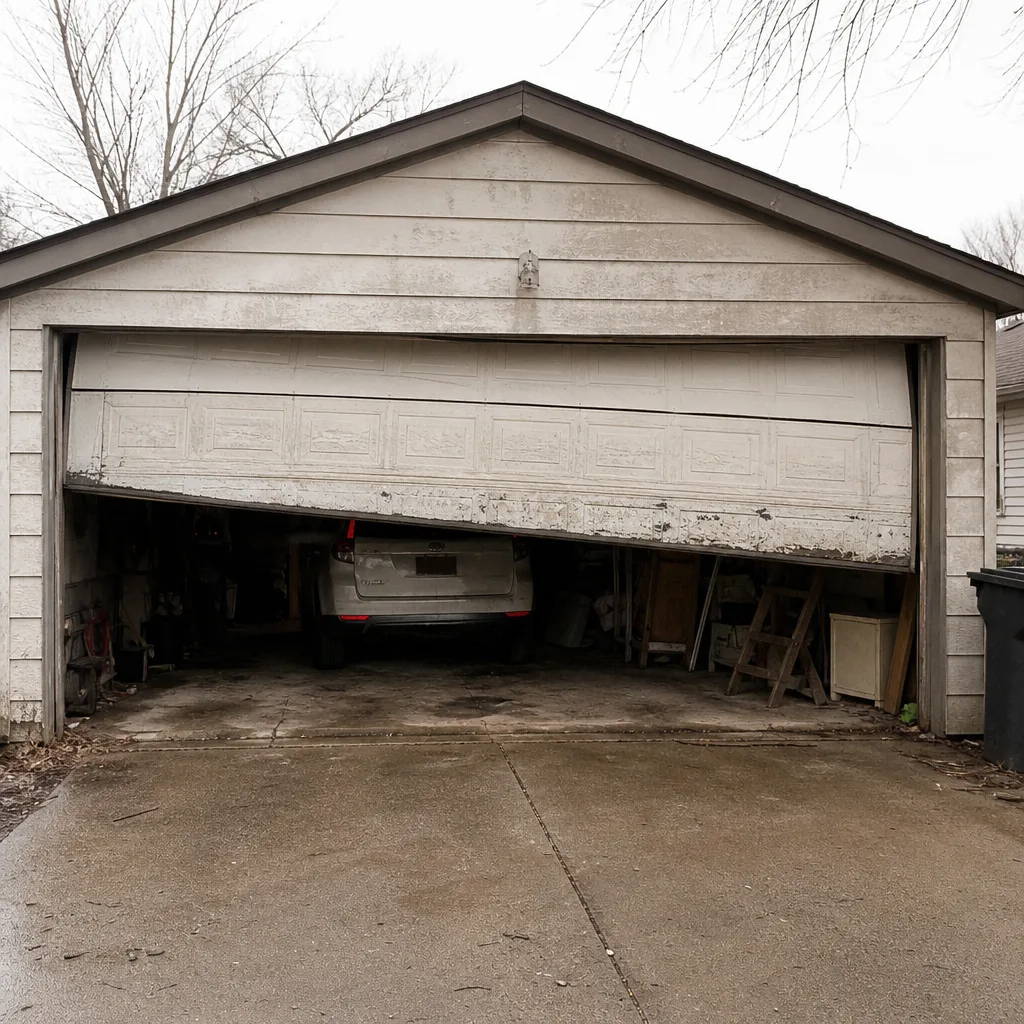 Before
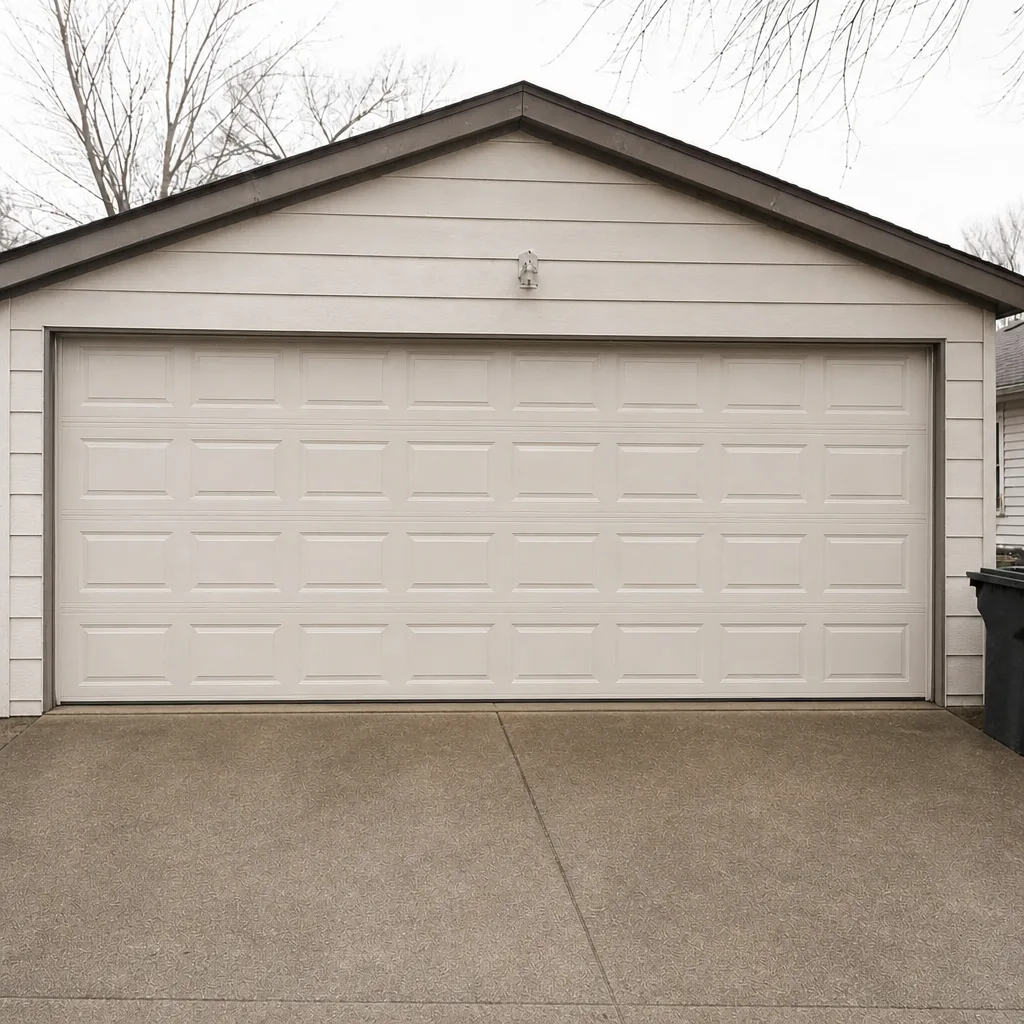 After
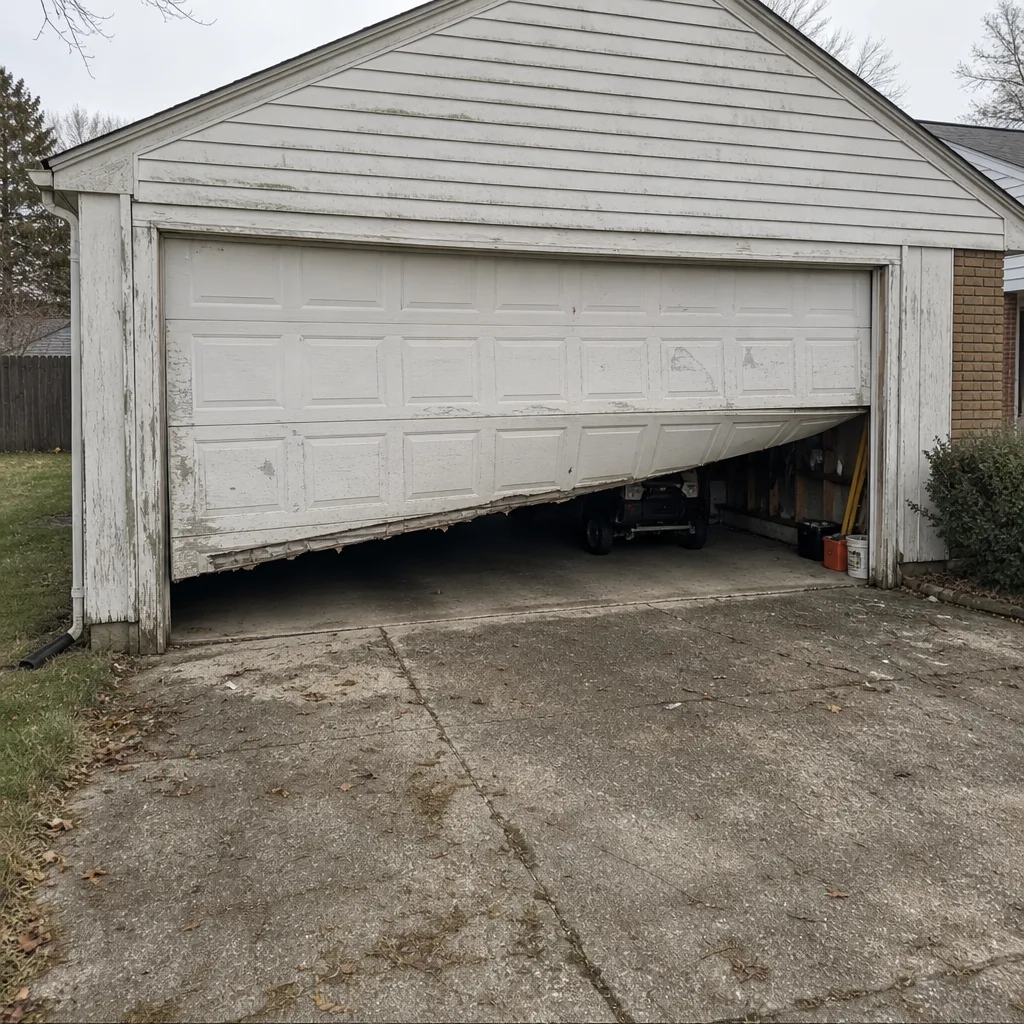 Before
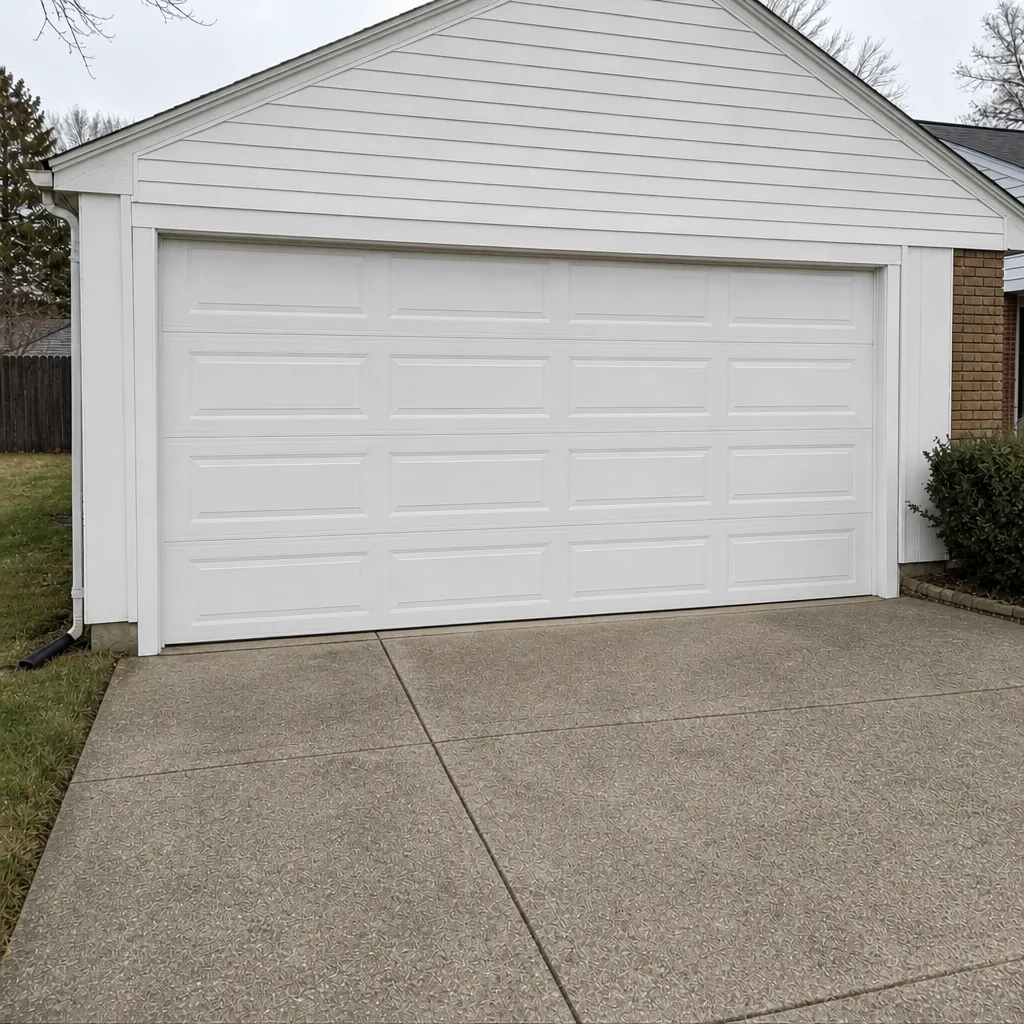 After
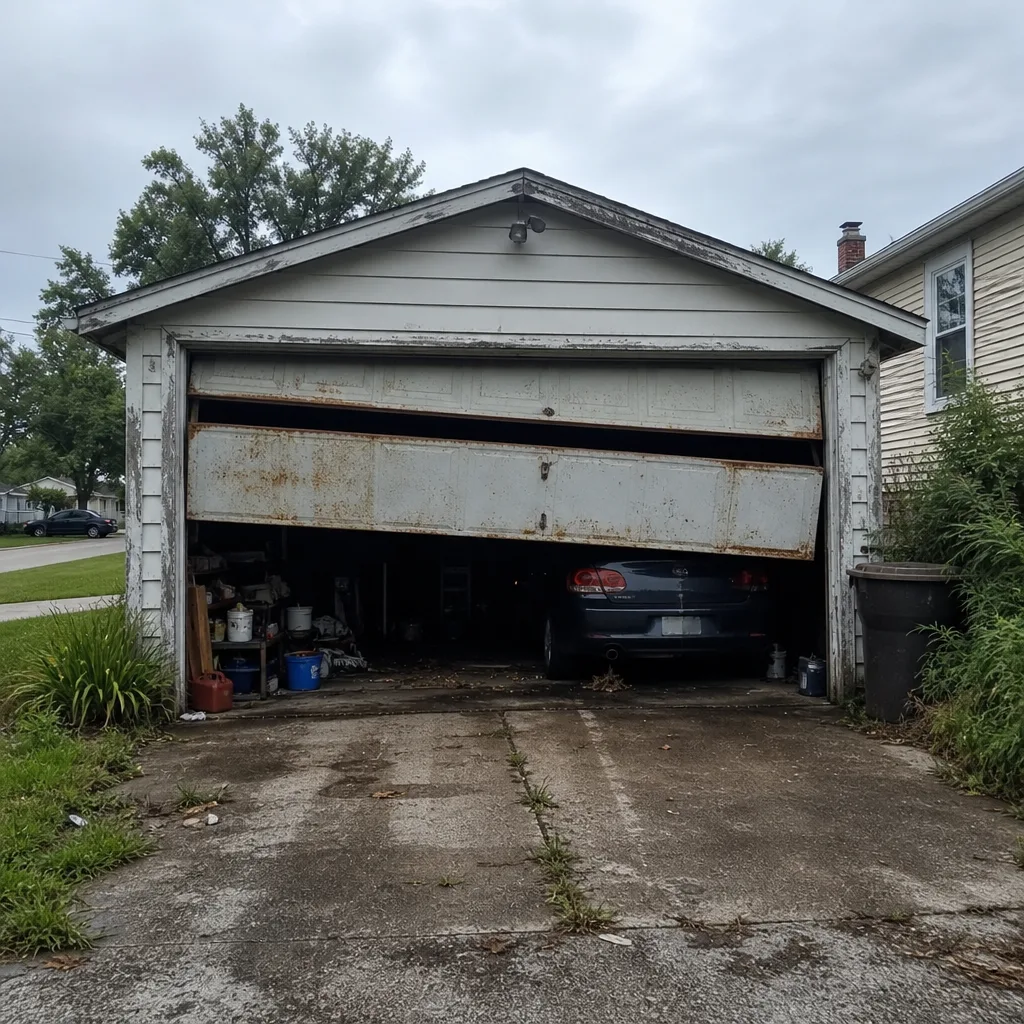 Before
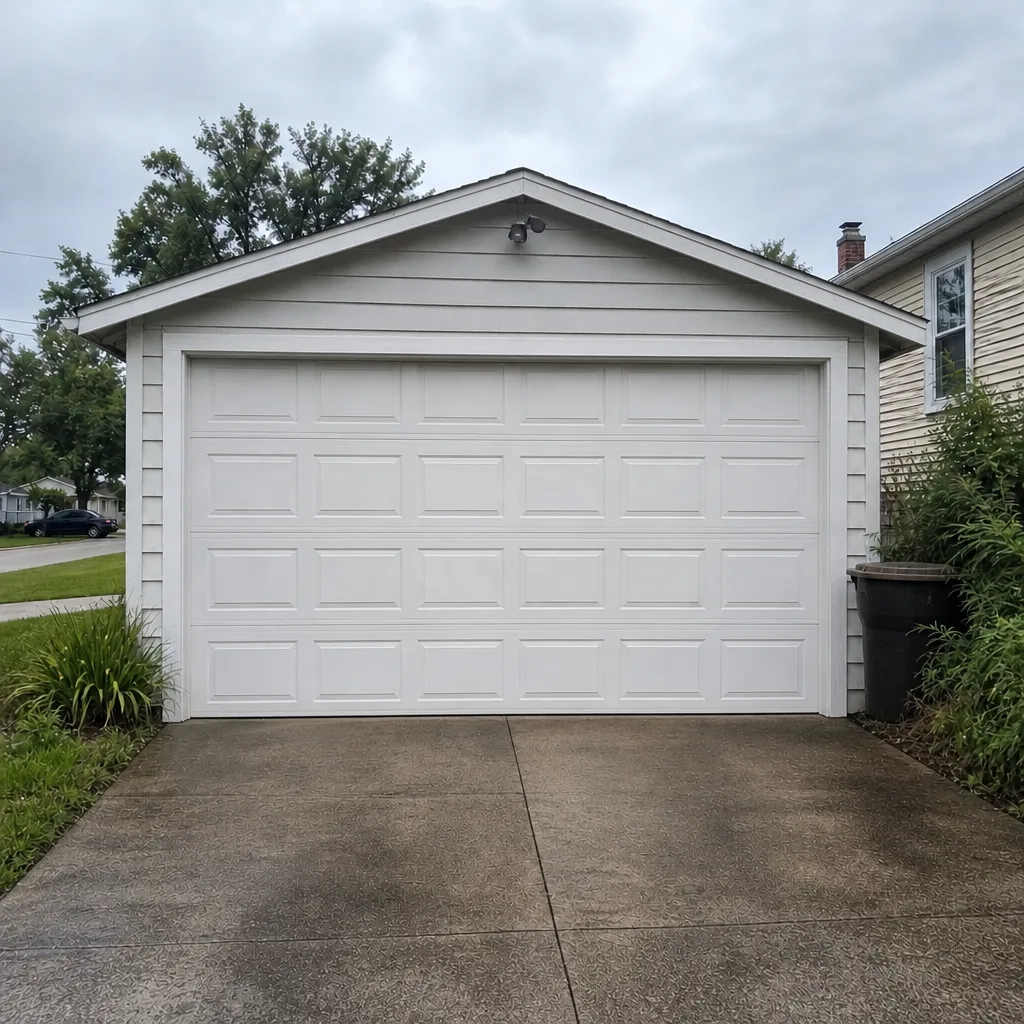 After
When to Call a Professional
Call a professional for anything involving springs, cables, or opener electrical work – that’s the short rule. If a spring has snapped or is visibly broken, don’t run the door until it’s fixed; a torsion spring failure means the door is being held by cables alone, and that’s dangerous. If a cable is frayed, kinked, or slack, call. If the door won’t hold position when you test its balance, the spring has lost tension and needs professional attention. If the door jumps a track or won’t close evenly, call before it damages the frame. If your opener stops reversing on contact or the photo-eye sensors won’t stay aligned, call for garage door opener repair – these are safety devices you can’t afford to have fail. And if the door is stuck open, unplug the opener, secure the door, and call immediately. Lorain Garage Door Repair Pros offers free estimates in Lorain – call (866) 937-7151.
Frequently Asked Questions
Do a full checkup twice a year, in late October before the first hard freeze and in early April after the freeze-thaw season. Those are the two highest-leverage windows in Northeast Ohio’s climate. In between, keep tracks clean and monitor for any unusual noise. If your door gets heavy daily use, these checkups are the bare minimum. Call (866) 937-7151 for a free estimate on any work the checks turn up.
You can apply a light coat of the correct spring lubricant, but only after a technician has confirmed the spring is sound. Never try to adjust, tighten, or repair a torsion spring – it’s held under enough tension to cause serious injury. If you see a gap in the coil or the door won’t hold position, stop and call a professional. Call (866) 937-7151 for a free estimate on spring repair.
It depends on the part. White lithium grease works well for hinges, rollers, and the opener chain, but it’s the wrong choice for torsion springs, where it thickens in the cold. Use a dedicated spring lubricant or a light silicone spray on the springs. Never use WD-40 or motor oil. Call (866) 937-7151 if you’re unsure what a specific component needs.
Balance test is the best early warning: disconnect the opener, lift the door halfway, and let go. It should hold. If it sags or drifts down, the spring has lost tension and is on borrowed time. A visible gap in the coil means it’s already broken. Watch for a door that feels heavier than it did a few months ago. Call (866) 937-7151 for a free estimate before it fails.
Replace weatherstripping when it stops sealing, not on a calendar. In Lorain’s climate, the bottom seal takes a beating from freeze-thaw cycles and typically needs replacement every few years. Inspect it in April after the winter and in October before the next one. If it’s cracked, brittle, or lifted off the floor, replace it. A poor seal costs you on heat and lets water and pests in. Call (866) 937-7151 for a free estimate if the door frame trim also needs work.
A fraying cable, a roller with a flat spot, a squeal that keeps returning after lubrication, and a door that runs slower or heavier than it used to are the main warning signs. Catch any of these at routine maintenance and it’s a small repair; ignore them and it becomes a stuck door. Call (866) 937-7151 for a free estimate on the fix.
The Bottom Line
A garage door maintenance schedule isn’t a single task – it’s a calendar. Springs and cables need a visual check every six months, rollers a proper inspection annually, weatherstripping a fresh look twice a year. Lubricant goes on hinges and rollers, never on the tracks, and never with white lithium on torsion springs. In Lorain, the two windows that matter most are late October (pre-winter prep) and early April (post-winter inspection); nail those and you’ve done the work that prevents most emergency calls. Handle the homeowner tasks yourself and call a professional for anything spring- or cable-related. That split is what keeps a door working safely, not just quietly.
When an estimate or professional work is what you need, Lorain Garage Door Repair Pros offers free estimates across Lorain. We work with all major brands, including Genie, Clopay, Amarr, and Wayne Dalton. Call (866) 937-7151. We answer 24/7. Fast dispatch from 7am to 7pm, Sunday through Friday.
Written by the team at Lorain Garage Door Repair Pros.